All Posts
Collected reviews from decades of reading — organized by subject and written for clarity, context, and long-term reference.
Categories
- A Very Short Introduction (4)
- Afghanistan (5)
- Africa (3)
- Age of Discovery (14)
- American Revolution (29)
- Ancient Greece (11)
- Ancient Rome (2)
- Anglo-German Naval Competition (8)
- Anthropology (3)
- Art History (6)
- Artists (16)
- British History (16)
- Business Books (19)
- Business Greats (12)
- Central Banking (8)
- China (1)
- Cold War Era (19)
- Colonial America (25)
- Commodities (10)
- Corporate Biography (11)
- Counter Insurgency (6)
- Cuba (1)
- Disease (9)
- Early Modern Europe (8)
- Early Republic (21)
- Economic Development (12)
- Economics (17)
- French Revolution (8)
- Great Depression (6)
- Great Projects (9)
- Great Writers (4)
- Industrial Revolution (14)
- Iranian Revolution (4)
- Italian Renaissance (27)
- Jacksonian America (4)
- Korea (1)
- Middle Ages (4)
- Middle East (5)
- Military Innovation (20)
- Napoleon (3)
- Philosophy (4)
- Pop History (32)
- Progressive Era (8)
- Republican Rome (16)
- Roman Empire (25)
- Russian History (5)
- Russian Revolution (3)
- Sri Lanka (3)
- The Gilded Age (4)
- U.S. Civil War (7)
- U.S. Presidents (16)
- Vietnam (8)
- World War I (6)
- World War II (10)
-

In “The History of Money” anthropologist Jack Weatherford does exactly as promised, delivering a fast-paced, 2,600 year narrative of money. Weatherford breaks the story into three more-or-less equal thirds. Phase One, “Classic Cash,” traces the history of money from the first known coined currency in the western Anatolian kingdom of Lydia in 640 BC to…
-

Walter Isaacson’s “The Innovators: how a group of hackers, geniuses, and geeks created the digital revolution” may be his most ambitious project yet. Unlike his award-winning biographies, “The Innovators” is a thematic history of the Information Age. The whole story is indeed complex and convoluted, beginning with the inspirations of Charles Babbage and Lady Ada…
-
They don’t make them like John J. McCloy any more, influential men who serve presidents of both parties on issues of enormous national importance. Kai Bird tells McCloy’s amazing life story in this lengthy single volume biography first published in 1992. McCloy came from rather humble beginnings. His insurance executive father died when he was…
-
I love to read popular histories by authors such as David McCullough, Candice Millard, Stacy Schiff and Roger Crowley. I was hoping that the “The Glorious Revolution” would be cut from the same mold. I was persuaded by the back cover of the paperback edition, which claims the book is, “A thrilling narrative account of…
-
One of the most influential business books of all-time, Clay Christensen’s “The Innovator’s Dilemma” is a must-read for anyone interested in business strategy. The author’s paradoxical conclusion is that what is often perceived as good management practice – listen to and faithfully serve your current customer base – actually exacerbates the problems associated with dealing…
-
The first in a monumental five volume series on the 36th president of the United States, “The Path to Power” takes nearly 800 pages to cover just the first 32 years of Lyndon Baines Johnson’s life. Often times biographers lose their sense of objectivity about their subject and end up writing a glowing hagiography. Such…
-

Volume II of “The Years of Lyndon Johnson” takes place over just seven years, from 1941 to 1948, the interregnum between Johnson’s two US senate races. It marks perhaps the lowest ebb in Johnson’s political fortunes, a period of deep and lasting personal malaise. Volume I, “The Path to Power,” introduces Johnson as a man…
-
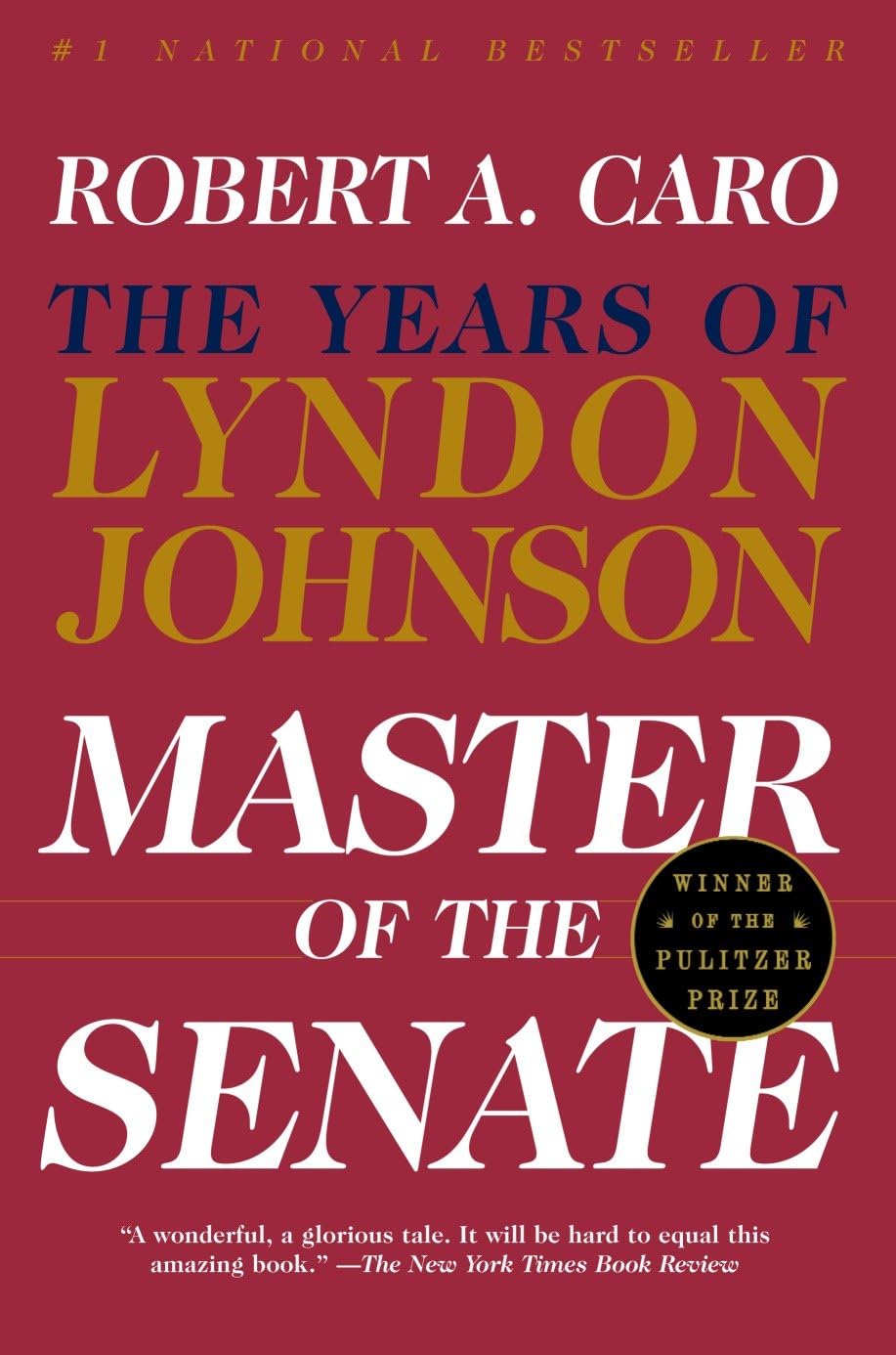
The third volume in Robert Caro’s monumental “The Years of Lyndon Johnson,” “Master of the Senate” focuses in on Johnson’s storied tenure in the Senate from 1949 to 1960. Overall, Caro is less critical of Johnson than in previous volumes. He writes in awe of Johnson’s improbably fast and remarkably high ascent within the cloistered…
-

Henry Halleck is probably the most consequential Civil War general that you’ve never heard of. In this slender 1962 biography by famed historian Stephen Ambrose, Halleck emerges from the shadows to take his rightful place in the pantheon of Union war generals. Halleck graduated third in his West Point class of 1839 and was immediately…
 What's Tim Reading Now?