All Posts
Collected reviews from decades of reading — organized by subject and written for clarity, context, and long-term reference.
Categories
- Afghanistan (5)
- Africa (3)
- Age of Discovery (14)
- American Revolution (25)
- Ancient Greece (10)
- Ancient Rome (1)
- Anglo-German Naval Competition (8)
- Anthropology (3)
- Artists (12)
- British History (15)
- Business Books (16)
- Business Greats (12)
- Central Banking (7)
- China (1)
- Cold War Era (19)
- Colonial America (24)
- Commodities (10)
- Corporate Biography (11)
- Counter Insurgency (6)
- Cuba (1)
- Disease (9)
- Early Modern Europe (7)
- Early Republic (13)
- Economic Development (12)
- Economics (17)
- French Revolution (8)
- Great Depression (6)
- Great Projects (9)
- Great Writers (4)
- Industrial Revolution (14)
- Iranian Revolution (3)
- Italian Renaissance (25)
- Jacksonian America (4)
- Korea (1)
- Middle Ages (4)
- Middle East (5)
- Military Innovation (20)
- Napoleon (3)
- Philosophy (3)
- Pop History (28)
- Progressive Era (8)
- Republican Rome (16)
- Roman Empire (23)
- Russian History (5)
- Russian Revolution (3)
- Sri Lanka (3)
- The Gilded Age (4)
- U.S. Civil War (7)
- U.S. Presidents (14)
- Vietnam (8)
- World War I (6)
- World War II (9)
-
Each year I choose a broad historical subject to immerse myself in and, if possible, come close to mastering. In 2024 it was the Italian Renaissance; the year before, the Industrial Revolution. In 2025 I turned to early colonial America. Of the dozen or so books I read – ranging from accounts of the Spanish…
-

In Chip War: The Fight for the World’s Most Critical Technology (2022) historian Chris Miller delivers a comprehensive and urgent account of how the semiconductor has become the most critical – and contested – resource in the modern world. His central insight is that microchips are not merely the foundation of the digital economy but…
-

John Singleton Copley stands as the foremost American artist of the eighteenth century. At a time when Americans were widely regarded in Europe as provincial brutes, he nonetheless earned an honored place among the leading artists of the continent. His life was divided almost evenly between two worlds: the first thirty-seven years in Boston, and…
-
American Colonies: The Settling of North America (2001) by Alan Taylor is a sweeping and authoritative narrative of the European colonization of the Americas from 1492 to 1830. A decade later, the UC Davis historian distilled that expansive work into Colonial America: A Very Short Introduction (2013), part of Oxford’s acclaimed series of concise scholarly…
-
Rome and China: Comparative Perspectives on Ancient World Empires, edited by Walter Scheidel, represents an ambitious effort to bring rigorous comparative analysis to two of the most influential political systems of the ancient world: the Roman Empire in the West and the Qin–Han Empire in the East (221 BC to 220 AD). At a time…
-
Paying with plastic – especially now using our smartphones to tap-and-pay – is so easy and ubiquitous that it’s almost hard to imagine a time before credit cards transactions. Perhaps the most incredible part of the process is how fast and relatively secure it is when you consider all the moving parts and various players…
-

The Sun King, Louis XIV, died in 1715 after 70 years on the throne. In partnership with his aide Jean-Baptiste Colbert, he set out to establish royal control over all aspects of life. Rigid regulations and etiquette dominated all aspects of French life in the late seventeenth century, including art. The Royal Academy of Painting…
-

Life is short, and the list of worthwhile books is inexhaustibly long, so it pays to exercise some due diligence when choosing what to read. I picked up The Secret Life of Groceries: The Dark Miracle of the American Supermarket (2020) by Benjamin Lorr for two reasons. First, Confluent’s Startup of the Year was a…
-
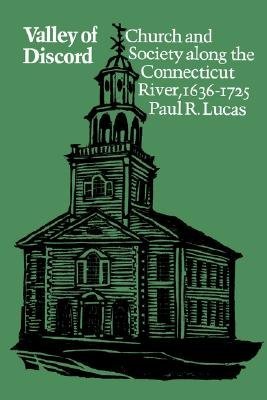
Valley of Discord: Church and Society Along the Connecticut River, 1636-1725 (1976) by Paul R. Lucas
Paul R. Lucas’s Valley of Discord stands as a compelling corrective to the mid-twentieth-century tendency among historians to treat early New England’s Puritan society as a harmonious, monolithic community of like-minded settlers dedicated to a shared religious mission. Lucas argues that, far from an orderly cultural consensus, the Connecticut River valley was a crucible of…
-
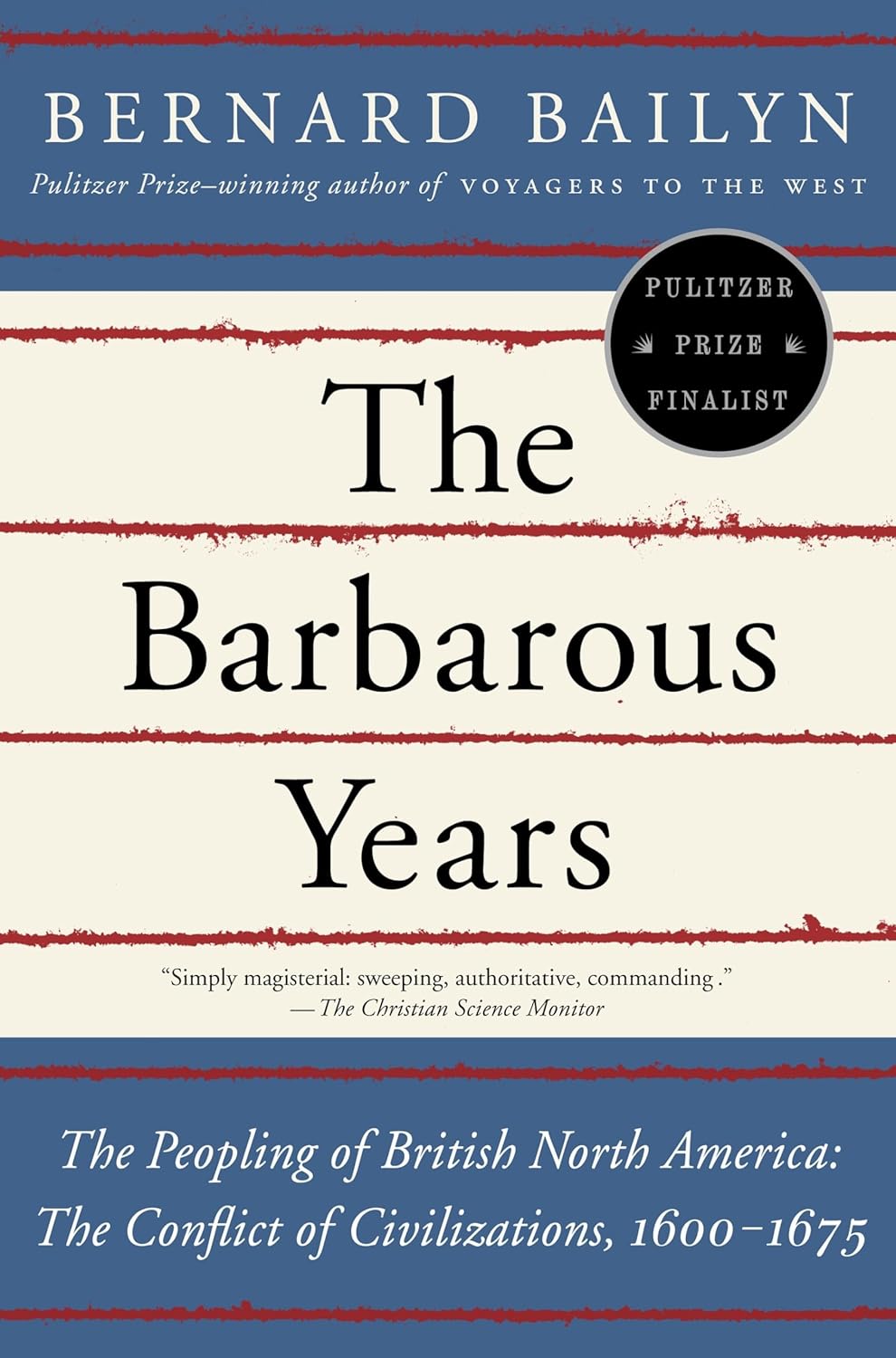
Bernard Bailyn’s The Barbarous Years: The Peopling of British North America, 1600–1675 (2012) is something of a reset on how we should think about early American settlement. His core insights, which he develops through “studies within stories,” run against the tidy, teleological “origins of the United States” story. In short, Bailyn claims that early American…
 What's Tim Reading Now?