All Posts
Collected reviews from decades of reading — organized by subject and written for clarity, context, and long-term reference.
Categories
- A Very Short Introduction (4)
- Afghanistan (5)
- Africa (3)
- Age of Discovery (14)
- American Revolution (29)
- Ancient Greece (11)
- Ancient Rome (2)
- Anglo-German Naval Competition (8)
- Anthropology (3)
- Art History (6)
- Artists (16)
- British History (16)
- Business Books (19)
- Business Greats (12)
- Central Banking (8)
- China (1)
- Cold War Era (19)
- Colonial America (25)
- Commodities (10)
- Corporate Biography (11)
- Counter Insurgency (6)
- Cuba (1)
- Disease (9)
- Early Modern Europe (8)
- Early Republic (21)
- Economic Development (12)
- Economics (17)
- French Revolution (8)
- Great Depression (6)
- Great Projects (9)
- Great Writers (4)
- Industrial Revolution (14)
- Iranian Revolution (4)
- Italian Renaissance (27)
- Jacksonian America (4)
- Korea (1)
- Middle Ages (4)
- Middle East (5)
- Military Innovation (20)
- Napoleon (3)
- Philosophy (4)
- Pop History (32)
- Progressive Era (8)
- Republican Rome (16)
- Roman Empire (25)
- Russian History (5)
- Russian Revolution (3)
- Sri Lanka (3)
- The Gilded Age (4)
- U.S. Civil War (7)
- U.S. Presidents (16)
- Vietnam (8)
- World War I (6)
- World War II (10)
-
In 1965, French Minister of Finance Valéry Giscard d’Estaing complained that the dollar’s dominance as the global reserve currency gave the United States an “exorbitant privilege.” I had heard that expression used many times before and picked up this book hoping to more fully understand the nature and extent of that privilege. Unfortunately, despite the…
-

“Manhunt: The 12-Day Chase for Lincoln’s Killer” was a commercial and critical smash hit from the moment it was released in 2007, and rightfully so. Author James Swanson weaves a detailed and enthralling narrative from first-hand accounts and documentary evidence. It’s trite to say that a popular work of historical non-fiction reads like a novel,…
-
The 1956 Hungarian Revolution was one of the most remarkable events of the Cold War. Seemingly out of nowhere, and quite improbably, an entire people bravely rose up against the ruling communist party and the occupying Red Army. And for a brief moment, and even more improbably, they were victorious. Victor Sebestyen, a British citizen…
-

Few armed conflicts in history have be shorter, more decisive, or more consequential than the Six Day War of June 1967. Over the course of just 132 hours the tiny upstart state of Israel conquered 42,000 square miles, including the Old City of Jerusalem and the West Bank from Jordan, the Golan Heights from Syria,…
-
I picked up David Eltis’ “The Military Revolution in Sixteenth-Century Europe” out of a clearance bin at Barnes & Noble many years ago. It remained buried and forgotten in a corner of my home library until I stumbled upon it after reading about naval innovation around the same period. It was a fortuitous find and…
-
Stacy Schiff is one of my favorite living historians. Another is Ron Chernow, the Pulitzer Prize-winning author of “Alexander Hamilton.” Here is what Chernow has to say about Schiff: “Even if forced at gunpoint, Stacy Schiff would be incapable of writing a dull page or a lame sentence.” It’s true; Schiff has the unique ability…
-
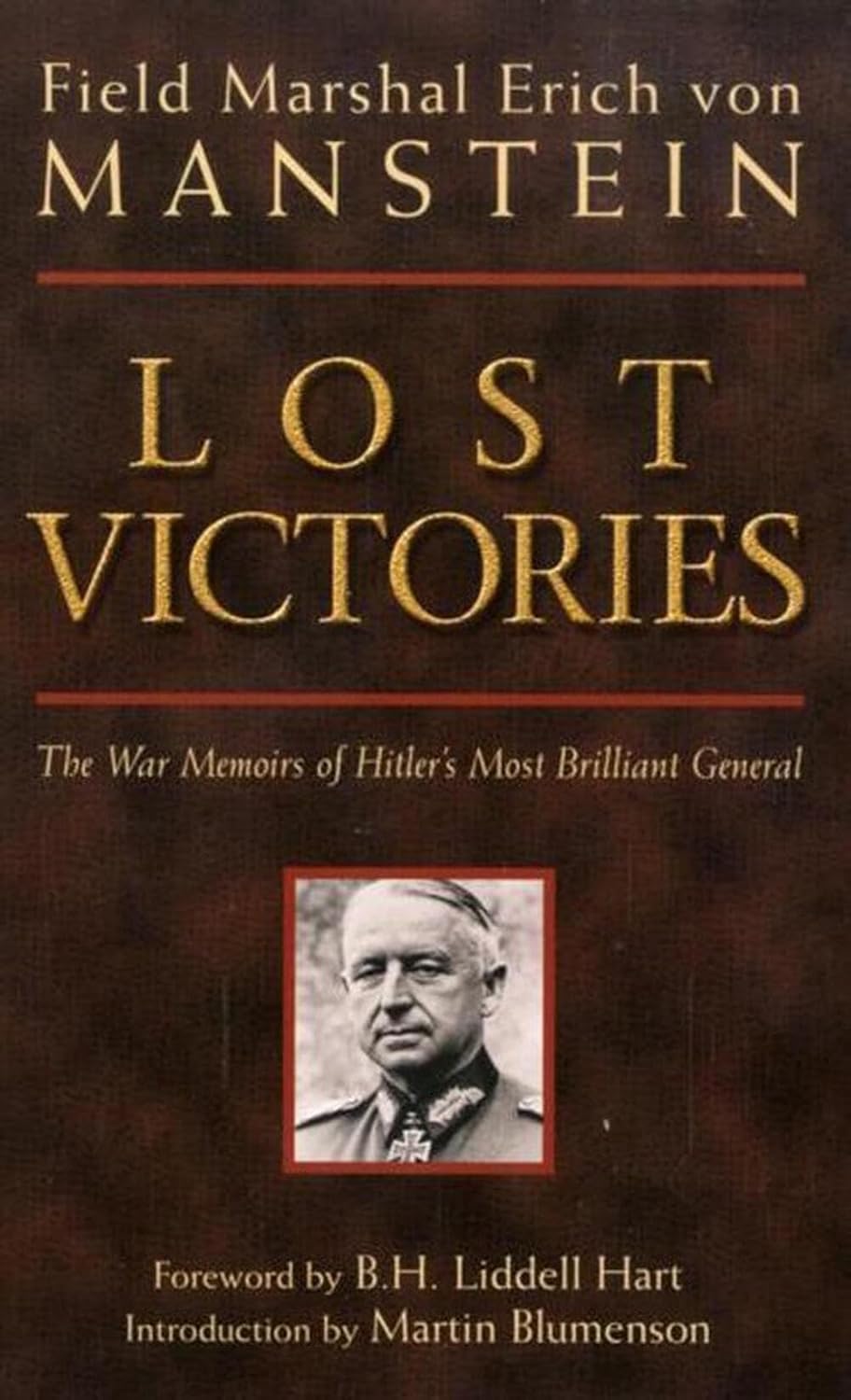
Erich von Manstein was considered by his peers as the most talented general officer in the German army. His celebrated Second World War memoir, “Lost Victories,” chronicles his exploits, frustrations, victories and defeats as a chief of staff in Poland in 1939, commander of 38th Corps in France in 1940, 56th Panzer Corps during the…
-

The Cleopatra most of us know is a fictional creation. The story we know comes mainly from the early first century Roman writers Plutarch and Dio. According to author Stacy Schiff, that’s like reading a history of twentieth-century America written by Chairman Mao. In short, our image of Cleopatra is “the joint creation of Roman…
-

“He was the first martyr of free speech and free thought.” So claims I.F. Stone in this 1988 bestseller about the trial and execution of Socrates, the great Athenian philosopher, in 399 BC. Thirty years after its initial publication, the relevance of the story has never been greater. In a world of campus safe spaces,…
 What's Tim Reading Now?