All Posts
Collected reviews from decades of reading — organized by subject and written for clarity, context, and long-term reference.
Categories
- Afghanistan (5)
- Africa (3)
- Age of Discovery (14)
- American Revolution (25)
- Ancient Greece (10)
- Ancient Rome (1)
- Anglo-German Naval Competition (8)
- Anthropology (3)
- Artists (12)
- British History (15)
- Business Books (16)
- Business Greats (12)
- Central Banking (7)
- China (1)
- Cold War Era (19)
- Colonial America (24)
- Commodities (10)
- Corporate Biography (11)
- Counter Insurgency (6)
- Cuba (1)
- Disease (9)
- Early Modern Europe (7)
- Early Republic (13)
- Economic Development (12)
- Economics (17)
- French Revolution (8)
- Great Depression (6)
- Great Projects (9)
- Great Writers (4)
- Industrial Revolution (14)
- Iranian Revolution (3)
- Italian Renaissance (25)
- Jacksonian America (4)
- Korea (1)
- Middle Ages (4)
- Middle East (5)
- Military Innovation (20)
- Napoleon (3)
- Philosophy (3)
- Pop History (28)
- Progressive Era (8)
- Republican Rome (16)
- Roman Empire (23)
- Russian History (5)
- Russian Revolution (3)
- Sri Lanka (3)
- The Gilded Age (4)
- U.S. Civil War (7)
- U.S. Presidents (14)
- Vietnam (8)
- World War I (6)
- World War II (9)
-

work in a corporate environment, mainly alongside MBAs, and The War for America by Piers Mackesy is one of the rare substantive history books I would enthusiastically recommend as professional reading to my colleagues. It offers a compelling study of leadership, strategy, and organizational dynamics—lessons as relevant to boardrooms as they are to battlefields. Mackesy’s…
-
I first read this classic ten plus years ago during winter break as an undergraduate economics major. Not much sunk in back then, which says more about me than it does about the skilled author, Robert Heilbroner. The author turns a two hundred year history of rather recondite theories and inaccessible economic tomes into a…
-
Succinctly put, I loved this book. Ron Chernow’s “Titan” is more than a great business biography; it is one of the best biographies I’ve ever read. Although Standard Oil and the rise of big business in America clearly play a central role, this book is first and foremost about John D. Rockefeller: his convictions, his…
-

A decade ago, the defense policy community was a buzz about an emerging “Revolution in Military Affairs” (RMA) – a discontinuous change in the nature of warfare generated by the information revolution whose potential was so clearly demonstrated by the overwhelming advantage that precision guided munitions and operational awareness conferred to US forces in the…
-
“The Grand Strategy of Philip II” is a rare book. On the one hand, it is a convincing scholarly reassessment of Spanish imperial policy during the pivotal late 16th century. In that sense, the book is written to the high standards of the academy: exhaustive primary research – much of it in the original Spanish,…
-
The early twentieth century anthropologist Bronislaw Malinowski studied the yam-based culture of the Trobriand Islanders of Papua New Guinea. Villagers conspicuously displayed their yam harvest in front of their huts as a sign of wealth, but also power and prestige. At roughly the same time Norwegian-American economist Thorsten Veblen famously argued that people in the…
-

For most people the Renaissance is synonymous with art; Michelangelo, Leonardo, Raphael, Donatello, and Duerer are the names that define the age. Lisa Jardine, the late Professor of Renaissance Studies at Queen Mary University, argues in “Worldly Goods” (1996) that the art-objects associated with the Renaissance were, in fact, the fabulous by-products of an increasingly…
-
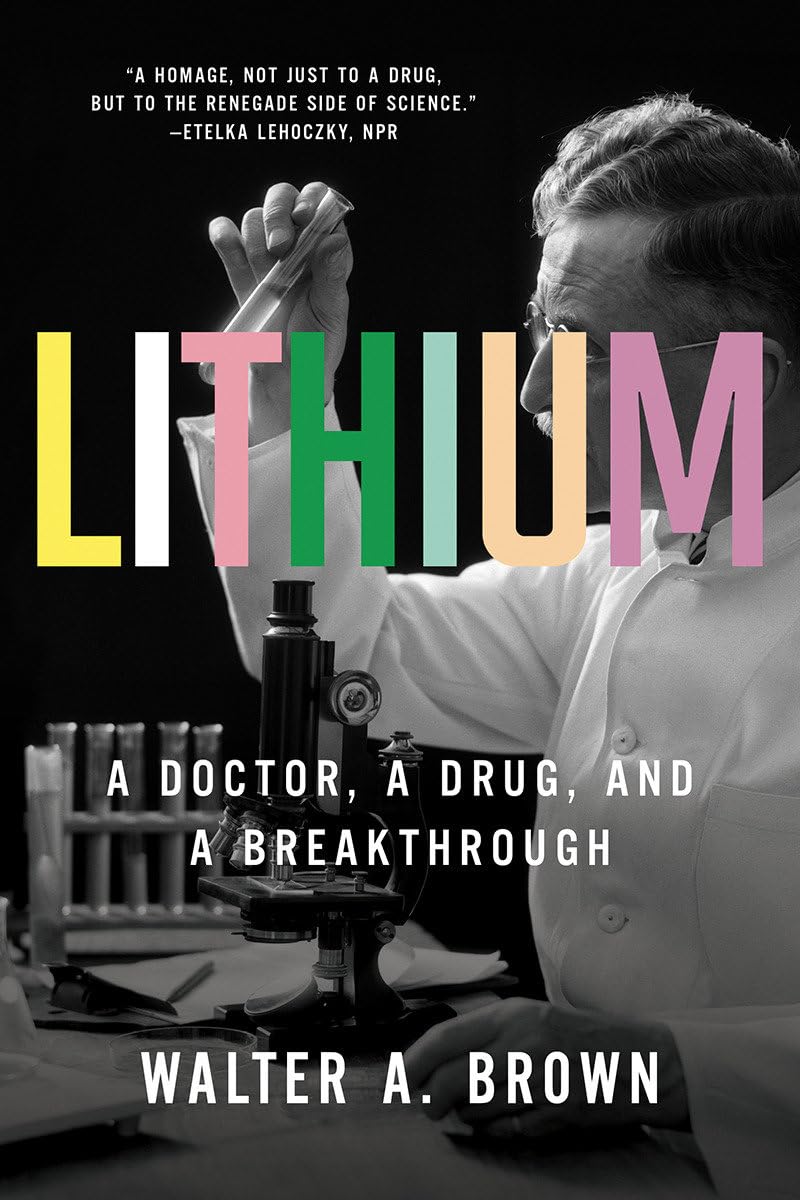
To begin with, let’s start at the end: lithium works. If you suffer from bipolar disorder and/or persistent suicidal ideation, there is no better prophylactic treatment than lithium. It is, as Brown likes to remind his readers, “the gold standard.” It is estimated that lithium has saved the US economy hundreds of billions of dollars…
-

In 2015, it was reported that the Large Hadron Collider could disprove the Big Bang Theory. Imagine what that could mean to the tenured professors of physics and astronomy at MIT and CalTech who have made their professional careers espousing the Big Bang Theory?! Decades of research, countless peer-reviewed articles, dozens of major conference presentations,…
 What's Tim Reading Now?