All Posts
Collected reviews from decades of reading — organized by subject and written for clarity, context, and long-term reference.
Categories
- A Very Short Introduction (4)
- Afghanistan (5)
- Africa (3)
- Age of Discovery (14)
- American Revolution (29)
- Ancient Greece (11)
- Ancient Rome (2)
- Anglo-German Naval Competition (8)
- Anthropology (3)
- Art History (6)
- Artists (16)
- British History (16)
- Business Books (19)
- Business Greats (12)
- Central Banking (8)
- China (1)
- Cold War Era (19)
- Colonial America (25)
- Commodities (10)
- Corporate Biography (11)
- Counter Insurgency (6)
- Cuba (1)
- Disease (9)
- Early Modern Europe (8)
- Early Republic (21)
- Economic Development (12)
- Economics (17)
- French Revolution (8)
- Great Depression (6)
- Great Projects (9)
- Great Writers (4)
- Industrial Revolution (14)
- Iranian Revolution (4)
- Italian Renaissance (27)
- Jacksonian America (4)
- Korea (1)
- Middle Ages (4)
- Middle East (5)
- Military Innovation (20)
- Napoleon (3)
- Philosophy (4)
- Pop History (32)
- Progressive Era (8)
- Republican Rome (16)
- Roman Empire (25)
- Russian History (5)
- Russian Revolution (3)
- Sri Lanka (3)
- The Gilded Age (4)
- U.S. Civil War (7)
- U.S. Presidents (16)
- Vietnam (8)
- World War I (6)
- World War II (10)
-
Liaquat Ahamed’s Pulitzer Prize-winning book, “Lords of Finance: The Bankers Who Broke the World” (2009), is a masterfully written and deeply insightful narrative of the economic and political turbulence that defined the early twentieth century. With the precision of a historian and the storytelling flair of a novelist, Ahamed traces the actions and missteps of…
-

Robert Remini’s Andrew Jackson and the Bank War (1967) is a real gem of a book. I can’t recommend it highly enough. It offers a brilliant account of one of the most consequential and contentious episodes in early American political and economic history. First published in 1967, this work continues to resonate not just as…
-
William W. Freehling’s Prelude to Civil War: The Nullification Controversy in South Carolina, 1816-1836 (1965) by William W. Freehling (1965) remains a foundational text in the study of antebellum American political development. In fewer than two hundred pages, Freehling delivers a penetrating and nuanced examination of one of the most consequential constitutional and political showdowns…
-
Mark Kurlansky’s “Salt: A World History” (2002) is a sweeping chronicle of how a single mineral – sodium chloride – has profoundly shaped human history. Like his earlier success, “Cod: A Biography of the Fish That Changed the World” (1998), Kurlansky uses a single commodity as a narrative lens through which to examine millennia of…
-

I find books about commodities to be oddly satisfying. How have oil, sugar, salt and cotton changed our lives for better and worse? In “Cod: A Biography of the Fish That Changed the World” (1998), Mark Kurlansky combines maritime adventure, culinary anthropology, economic history, and environmental warning into a single compelling narrative about a once…
-
Robert K. Massie’s “Dreadnought: Britain, Germany, and the Coming of the Great War” (1991) is a monumental achievement in narrative history, weaving together biography, diplomacy, military innovation, and geopolitical rivalry into a compelling and deeply human account of the path to World War I. It stands as one of my all-time favorite books. At its…
-

In the pantheon of Roman historical scholarship, few works have challenged conventional wisdom as provocatively as Erich Gruen’s “The Last Generation of the Roman Republic” (1974). This magisterial study fundamentally reinterpreted the final decades of the Roman Republic, arguing against the prevailing scholarly consensus that portrayed the period from 78 to 49 BC as one…
-
In the landscape of Roman historical scholarship, few works have proven as influential or controversial as William Harris’s “War and Imperialism in Republican Rome: 327-70 BC” (1979). This seminal study fundamentally challenged prevailing academic orthodoxy about the nature of Roman expansion, arguing that Rome’s imperial growth was driven not by defensive necessity or reluctant responses…
-
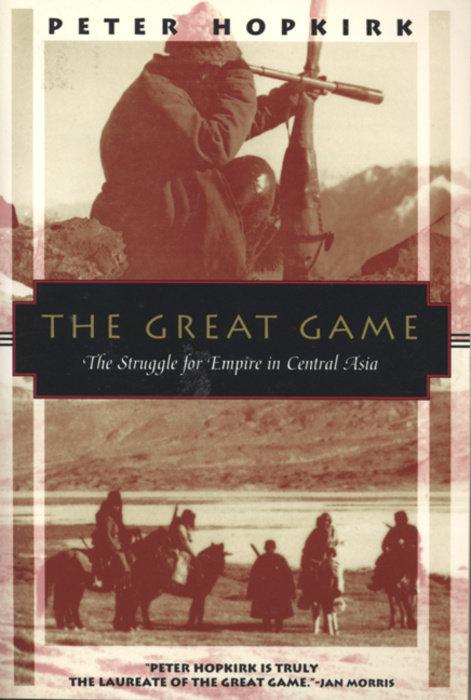
In the annals of imperial history, few conflicts have captured the imagination quite like the Great Game – that shadowy, century-long struggle between the British and Russian empires for dominance over Central Asia. Peter Hopkirk’s masterful work, “The Great Game: The Struggle for Empire in Central Asia” (1990), stands as the definitive account of this…
 What's Tim Reading Now?