All Posts
Collected reviews from decades of reading — organized by subject and written for clarity, context, and long-term reference.
Categories
- Afghanistan (5)
- Africa (3)
- Age of Discovery (14)
- American Revolution (25)
- Ancient Greece (10)
- Ancient Rome (1)
- Anglo-German Naval Competition (8)
- Anthropology (3)
- Artists (12)
- British History (15)
- Business Books (16)
- Business Greats (12)
- Central Banking (7)
- China (1)
- Cold War Era (19)
- Colonial America (24)
- Commodities (10)
- Corporate Biography (11)
- Counter Insurgency (6)
- Cuba (1)
- Disease (9)
- Early Modern Europe (7)
- Early Republic (13)
- Economic Development (12)
- Economics (17)
- French Revolution (8)
- Great Depression (6)
- Great Projects (9)
- Great Writers (4)
- Industrial Revolution (14)
- Iranian Revolution (3)
- Italian Renaissance (25)
- Jacksonian America (4)
- Korea (1)
- Middle Ages (4)
- Middle East (5)
- Military Innovation (20)
- Napoleon (3)
- Philosophy (3)
- Pop History (28)
- Progressive Era (8)
- Republican Rome (16)
- Roman Empire (23)
- Russian History (5)
- Russian Revolution (3)
- Sri Lanka (3)
- The Gilded Age (4)
- U.S. Civil War (7)
- U.S. Presidents (14)
- Vietnam (8)
- World War I (6)
- World War II (9)
-
David Halberstam’s “The Reckoning” first came out in 1986. That summer my middle school friends and I went to see the movie “Gung Ho,” starring Michael Keaton. It was a comedy about a failing auto plant in Detroit taken over by an upstart and hyper efficient Japanese automaker. Perhaps the only memorable thing about the…
-
It was commonly assumed in Revolutionary America that a republican form of government could only survive in an extraordinary society of distinctly moral and independent people. The political economy of the nation played a central role in either fostering or destroying that morality and independence. Hamiltonian Federalists and Jeffersonian Republicans each had clear and sharply…
-

Gordon S. Wood is an American institution. He is one of the most influential historians of early America that has ever lived. In “Empire of Liberty: A History of the Early Republic,” the third volume in the epic Oxford History of the United States, Wood explores the tumultuous decades between the ratification of the Constitution…
-
Malcolm Gladwell has had tremendous commercial success following a relatively simple formula: Ask an interesting question and then provide an unusual or unorthodox response through a variety of colorful vignettes. Many of his books have become mega hits (Blink, The Tipping Point, Outliers) and I have become a huge fan. Thus, I was surprised when…
-
Serious people have been trying to explain the genesis of the Industrial Revolution since the days of Max Weber and Karl Marx or later by Arnold Toynbee, who coined the term in 1884. However, it is only relatively recently that it has emerged as something of a cottage industry in academia. “The Great Divergence: China,…
-
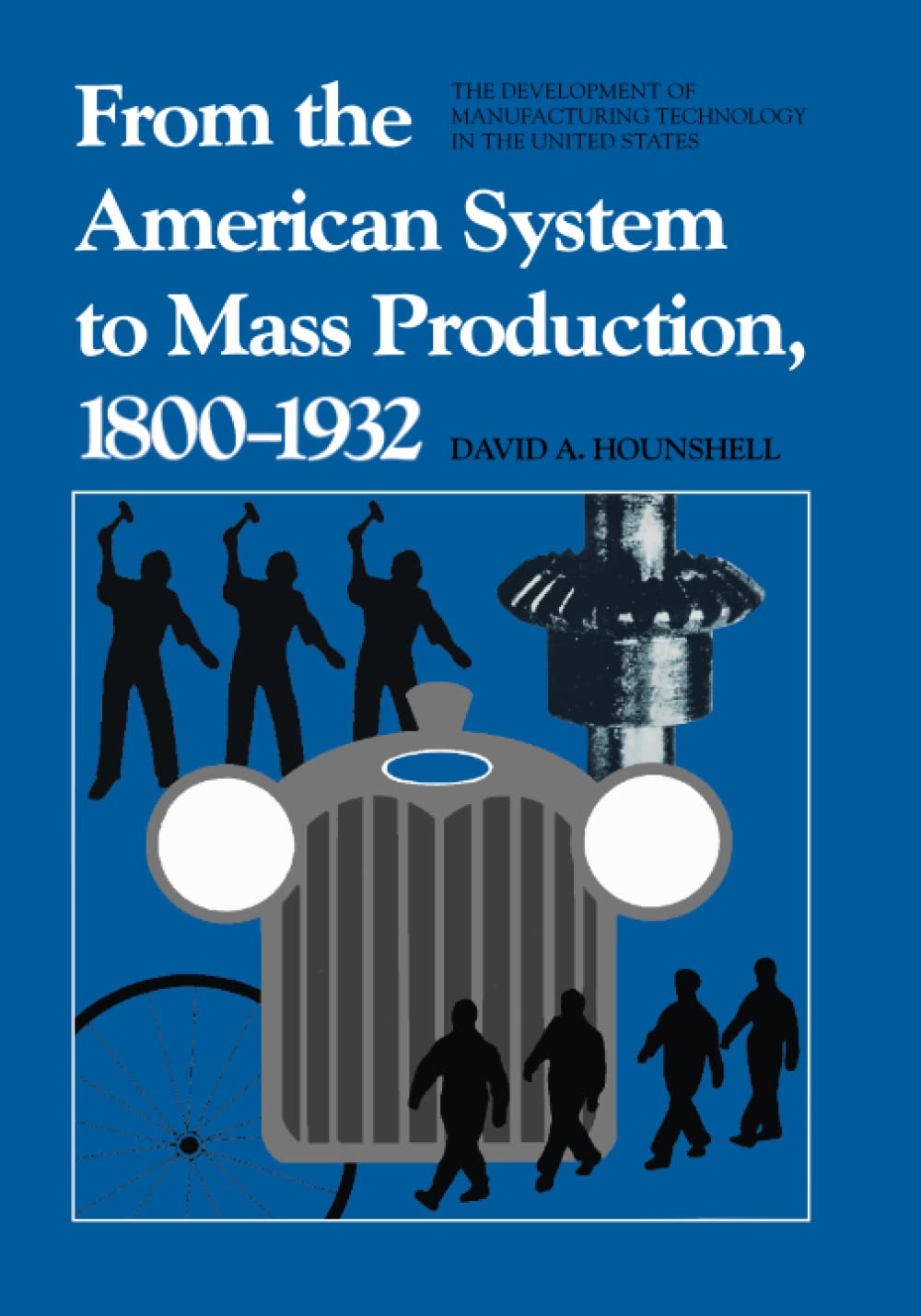
The United States emerged as an industrial colossus in the early twentieth century. An important component of that rise was the development of mass production, which was pioneered in the automotive industry, specifically Henry Ford’s Model T. In his book “From the American System to Mass Production, 1800-1932: The Development of Manufacturing Technology in the…
-
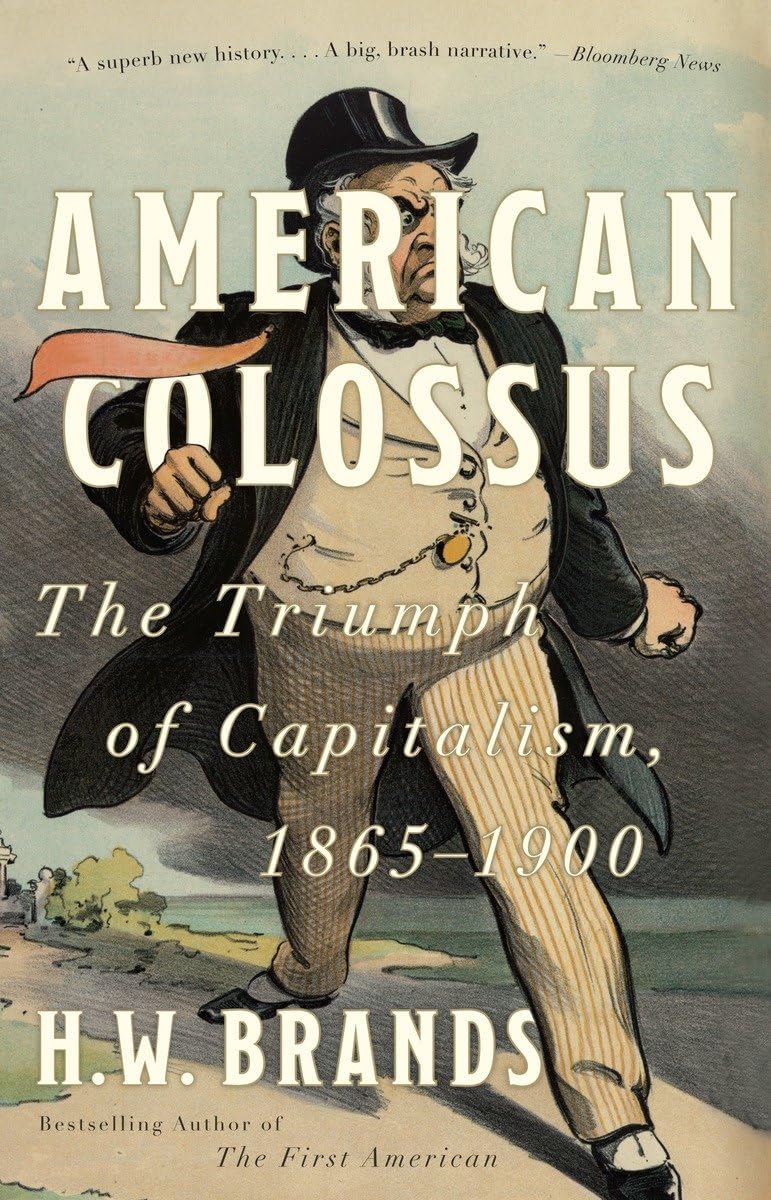
I’ve been reading scholarly non-fiction books for over a quarter century now. Over the years I’ve learned to vet my prospective reading list carefully. However, when it came to “American Colossus: The Triumph of Capitalism, 1865-1900” by H.W. Brands (2010), I got a bit sloppy with my due diligence and I paid the price for…
-

According to the author, Harriet Flower, professor of classics at Princeton, “Roman Republics” (2010) is “based on the fundamental idea that periodization is essential to historical thinking and writing.” No one thinks of American history since 1776 as one monolithic bloc and, Flower argues, you shouldn’t think of Republican Rome’s 450-year history that way either.…
-

Doris Kearns Goodwin is one of the most distinguished presidential historians of the past fifty years. Her extended profiles of Abraham Lincoln, Teddy Roosevelt, Franklin Roosevelt, and Lyndon Johnson have all been best sellers; some have even won the Pulitzer Prize. In “Leadership in Turbulent Times” (2018), Goodwin seems to traverse from the Harvard history…
 What's Tim Reading Now?