Author: Tim Graczewski
-
The Great Bridge: The Epic Story of the Building of the Brooklyn Bridge (1983) by David G. McCullough
hadn’t read anything by David McCullough in several years and had forgotten just how masterful a storyteller he is. The Great Bridge, published in 1972 as McCullough’s second major historical work, remains a towering achievement in narrative nonfiction and has earned its place at #48 on The Modern Library’s list of the “100 Best Non-Fiction…
-
The Military Revolution: Military Innovation and the Rise of the West, 1500-1800 (1988) by Geoffrey Parker
During the 1990s, discussions about a new “military revolution” shaped by advances in the Information Age dominated defense intellectual circles. Yet the concept of a “military revolution” as a transformative historical process actually dates back much further—to a seminal 1955 lecture by British historian Michael Roberts titled The Military Revolution 1560-1660. Building on and revising…
-

The Rules of the Game: Jutland and British Naval Command (1996) by G. A. H. Gordon
On the eve of the decisive showdown with Napoleonic France, Admiral Horatio Nelson was offered the opportunity to select any officer from the Navy List to serve in his fleet. Nelson’s confident, if not arrogant response was “Choose yourself, the same spirit actuates the whole profession.” The end result was Trafalgar, one of the most…
-

The War for America, 1775-1783 (1964) by Piers Mackesy
work in a corporate environment, mainly alongside MBAs, and The War for America by Piers Mackesy is one of the rare substantive history books I would enthusiastically recommend as professional reading to my colleagues. It offers a compelling study of leadership, strategy, and organizational dynamics—lessons as relevant to boardrooms as they are to battlefields. Mackesy’s…
-
The Worldly Philosophers: The Lives, Times and Ideas of The Great Economic Thinkers (1953) by Robert L. Heilbroner
I first read this classic ten plus years ago during winter break as an undergraduate economics major. Not much sunk in back then, which says more about me than it does about the skilled author, Robert Heilbroner. The author turns a two hundred year history of rather recondite theories and inaccessible economic tomes into a…
-
Titan: The Life of John D. Rockefeller, Sr. (2004) by Ron Chernow
Succinctly put, I loved this book. Ron Chernow’s “Titan” is more than a great business biography; it is one of the best biographies I’ve ever read. Although Standard Oil and the rise of big business in America clearly play a central role, this book is first and foremost about John D. Rockefeller: his convictions, his…
-

War Made New: Technology, Warfare, and the Course of History, 1500 to Today (2006) by Max Boot
A decade ago, the defense policy community was a buzz about an emerging “Revolution in Military Affairs” (RMA) – a discontinuous change in the nature of warfare generated by the information revolution whose potential was so clearly demonstrated by the overwhelming advantage that precision guided munitions and operational awareness conferred to US forces in the…
-

The Grand Strategy of Philip II (1998) by Geoffrey Parker
“The Grand Strategy of Philip II” is a rare book. On the one hand, it is a convincing scholarly reassessment of Spanish imperial policy during the pivotal late 16th century. In that sense, the book is written to the high standards of the academy: exhaustive primary research – much of it in the original Spanish,…
-
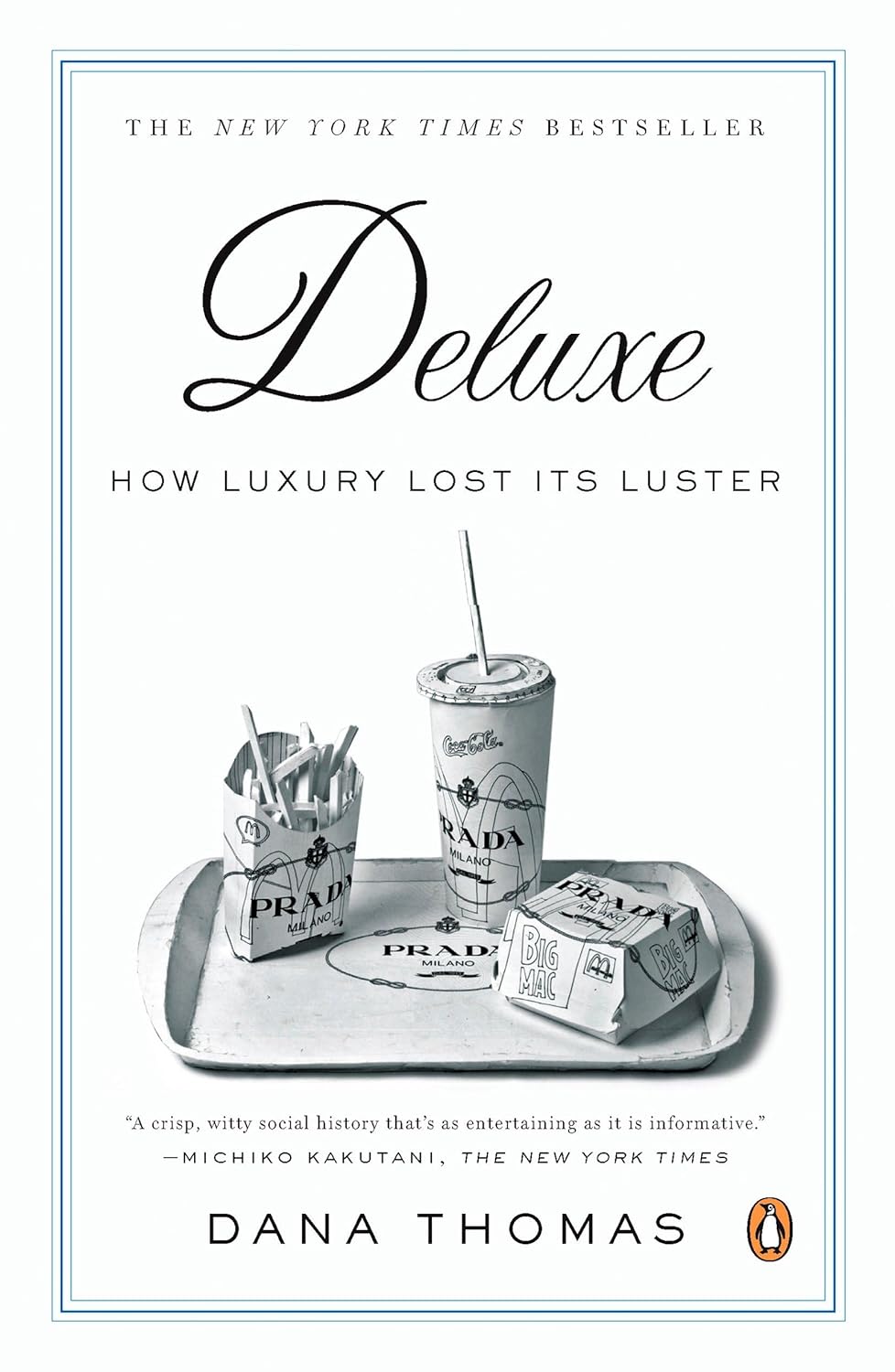
Deluxe: How Luxury Lost Its Luster (2007) by Dana Thomas
The early twentieth century anthropologist Bronislaw Malinowski studied the yam-based culture of the Trobriand Islanders of Papua New Guinea. Villagers conspicuously displayed their yam harvest in front of their huts as a sign of wealth, but also power and prestige. At roughly the same time Norwegian-American economist Thorsten Veblen famously argued that people in the…
 What's Tim Reading Now?