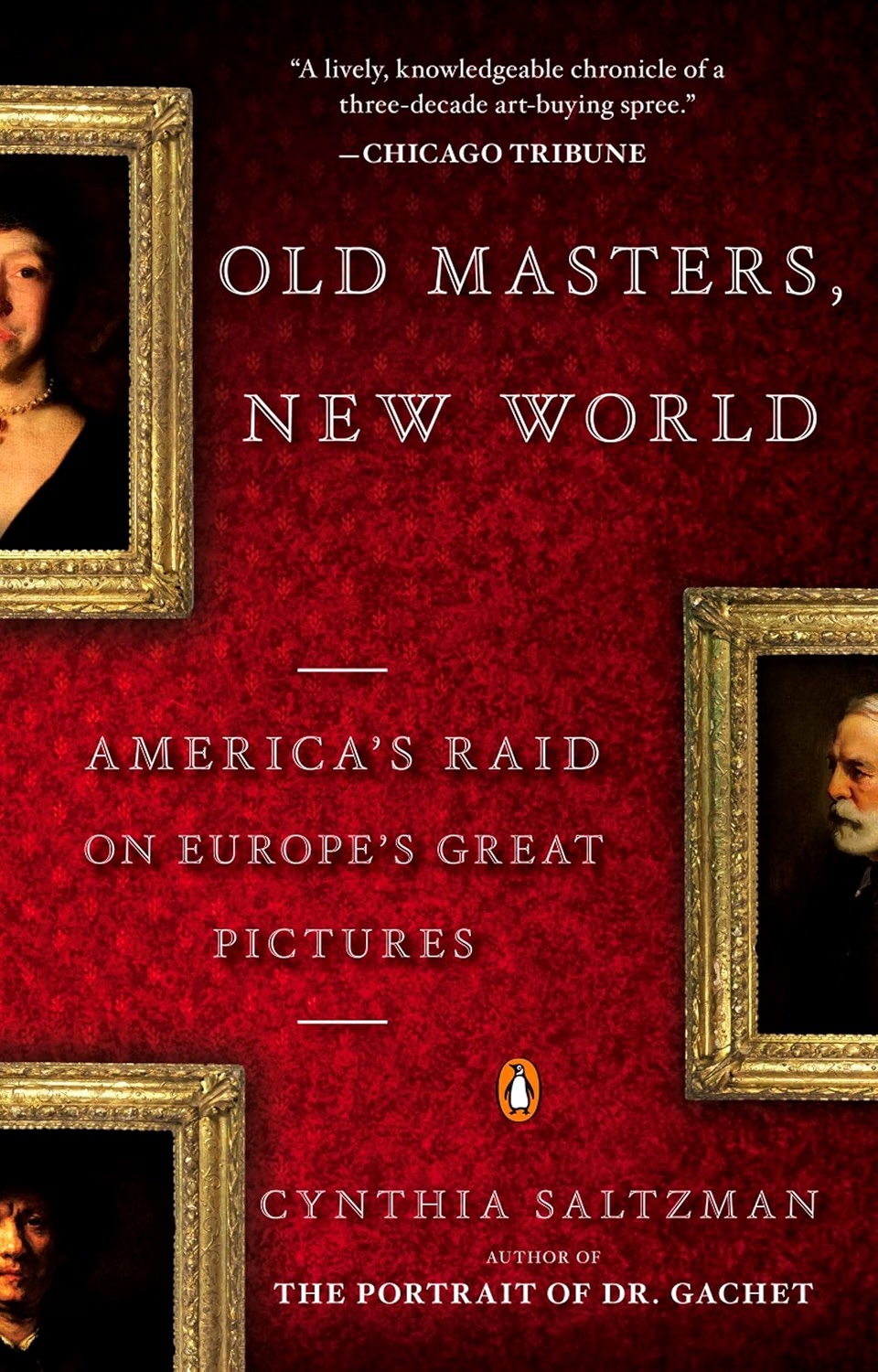
In the decades following the American Civil War, the United States emerged as the fastest-growing industrial power among the world’s wealthy nations. It was an era defined by the Second Industrial Revolution, the extraordinary accumulation of wealth, and the rise of the Gilded Age’s notorious robber barons. By the turn of the twentieth century, America had become a global leader in steel production, and its industrial tycoons ranked among the richest men in the world. Yet, despite its newfound economic might, the nation remained conspicuously deficient in what many, including Americans themselves, regarded as an essential hallmark of wealth, power, and cultural prestige: great works of art. Determined to remedy this perceived shortcoming, a small circle of immensely wealthy American collectors, aided by a largely forgotten cast of art historians, dealers, and connoisseurs, embarked on an ambitious campaign to bring Europe’s artistic masterpieces to American shores. Their attention focused particularly on the Old Masters, from the painters of the early Italian Renaissance to the great portraitists of the eighteenth century. Cynthia Saltzman chronicles this remarkable transatlantic transfer of artistic treasures – what she calls “one of history’s great migrations of art” – in Old Masters, New World: America’s Raid on Europe’s Great Pictures.
For centuries, European royalty had amassed vast collections of priceless works of art, from paintings and tapestries to sculptures and fine furniture. Yet the idea of making these treasures accessible to the public through national galleries and museums was a relatively recent development. The Louvre in Paris, the first of Europe’s great public art museums, opened in 1793, one of the more enduring legacies of the early French Revolution. Spain followed with the Prado in 1819, Prussia with the Berlin Gemaldegalerie in 1823, and Britain with the National Gallery in 1824. The United States was a relative latecomer, establishing the privately-funded Metropolitan Museum of Art in New York City in 1870, which embraced the public mission “to humanize, to educate and refine a practical and laborious people.”
It was not, however, a coordinated national effort that would bring Europe’s artistic masterpieces to American shores. Rather, beginning in the late nineteenth century, a small circle of immensely wealthy private collectors, operating largely independently of one another, launched what amounted to an American raid on the European art market. Each was aided by an assortment of predominantly European-based art dealers, connoisseurs, and advisers who served as their agents and intermediaries. Over the ensuing decades, these relationships fueled a frenzy of art acquisition, as American fortunes competed for Europe’s greatest treasures, driving prices to increasingly astonishing heights. Meanwhile, political and economic instability in Europe, coupled with increasingly burdensome inheritance and land taxes on the aristocracy, the traditional custodians of the world’s most valuable Old Masters, provided the push to match wealthy Americans’ pull, accelerating the flow of artistic treasures across the Atlantic.
Saltzman chronicles the roughly half-century from 1880 to the onset of the Great Depression, an era of frenzied transatlantic art collecting during which the prices commanded by Europe’s Old Masters reached extraordinary heights. Between 1880 and 1911 alone, the price of a prized Rembrandt rose from approximately $25,000 to $500,000 – a twentyfold increase, equivalent to a staggering compound annual growth rate of more than 10 percent. The Americans chiefly responsible for bringing Old World masterpieces across the Atlantic in the late nineteenth and early twentieth centuries were Boston’s Isabella Stewart Gardner, heiress to her father’s fortune and the beneficiary of her husband’s wealth; New York banking titan J. P. Morgan; Pittsburgh coke and steel magnate Henry Clay Frick; sugar baron Henry Havemeyer and his wife, Louisine; and Pittsburgh banker and future Treasury Secretary Andrew Mellon. Alongside these five principal collecting interests, Saltzman introduces a handful of other prominent figures, including railroad and foreign exchange speculator and early Metropolitan Museum president Henry Marquand, Philadelphia streetcar magnate Peter Widener, San Francisco railroad heiress Arabella Huntington, and New York retail tycoon Benjamin Altman, whose fortunes and artistic ambitions helped transform the American market for European masterpieces.
The growing appetite for European masterpieces among these well-heeled American collectors coincided with changes in British law that helped bring an extraordinary number of Old Masters onto the market. In 1882, Parliament passed the Settled Land Act, which gave Britain’s financially beleaguered landed aristocracy greater freedom to sell entailed estates and certain associated assets, including valuable works of art. For noble families struggling under mounting financial pressures, the legislation helped open the door to the sale of artistic treasures that had remained in their possession for generations. Over the ensuing years, thousands of paintings and other works of art entered the market, increasingly attracting bids from wealthy Americans eager to acquire Europe’s cultural patrimony. In 1886, the Duke of Marlborough sold Raphael’s *Ansidei Madonna* for a then-record $350,000 (about $13 million today), an astonishing sum that underscored the escalating value of Old Master paintings.
In Saltzman’s telling, the American buying frenzy began with Henry Gurdon Marquand, who had served as a trustee of the Metropolitan Museum of Art since 1871. For Marquand, Saltzman writes, “acquiring art was not a duty, but a passion.” In 1886, Marquand acquired two Van Dyck portraits from the aristocratic Methuen collection at Corsham Court in England, paying an extraordinary $40,000 (about $1.5 million in 2026 dollars) for James Stuart, Duke of Richmond and Lennox alone. The acquisitions helped inaugurate the American buying frenzy that would transform the transatlantic market for Old Masters. By 1889, Marquand had acquired thirty-five Old Masters, a collection that would eventually grow to fifty paintings before his death in 1902, by which time his personal fortune had collapsed. His generous donations to the Met, however, helped lay the foundation for what would become one of the world’s great collections of Old Master paintings. Marquand’s influence extended well beyond the museum’s galleries. “In the end,” Saltzman writes, “Henry Gurdon Marquand shaped not only the Metropolitan’s content but also its form.” He spearheaded the museum’s expansion and architectural transformation along Fifth Avenue, culminating in the completion of its grand new façade in 1902.
“Acquiring masterpieces demanded colossal wealth,” Saltzman writes, “but also discrimination, taste, timing, and opportunity.” These latter qualities were often supplied by a network of Europe-based art dealers and connoisseurs who served as trusted advisers, agents, intermediaries, and treasure hunters for their wealthy American patrons. Fiercely protective of their privileged relationships with these extraordinarily rich clients, such advisers frequently faced conflicts of interest, particularly when their commissions were tied directly to the prices their patrons paid for works of art. The higher the price, the greater their reward. Perhaps the most celebrated of these figures was Bernard Berenson, the influential art historian and connoisseur whose career became closely intertwined with that of Isabella Stewart Gardner, the next major American collector to emerge in Saltzman’s narrative after Marquand. Over the course of three decades, Gardner and Bereson would exchange thousands of letters, but only meet face-to-face less than a dozen times.
Berenson established himself as a leading authority on Italian Renaissance art at the age of thirty-one with the publication of Venetian Painters of the Renaissance in 1894. Throughout his life, Saltzman writes, Berenson pursued wealth and social standing while carefully cultivating the persona of a cosmopolitan aesthete and glamorous expatriate. His relationship with Gardner, and the access it afforded him to her considerable fortune, would prove instrumental in realizing both ambitions. Berenson eventually acquired I Tatti, a sumptuous villa in the hills outside Florence, which he bequeathed to his alma mater, Harvard University. Harvard subsequently transformed the estate into a permanent center for Renaissance studies.
Two years before Berenson published his book that established his reputation, Gardner had made her first Old Master acquisition, Vermeer’s The Concert, for approximately $6,000, just five years after Marquand had purchased a Vermeer for a mere $800. These were the first two paintings by the Dutch master to reach American shores, heralding the arrival of an artist whose works would eventually rank among the most coveted in the world. The Concert would become one of the thirteen works stolen from the Isabella Stewart Gardner Museum in the infamous 1990 heist, a crime that remains unsolved more than three decades later.
Saltzman describes the New York-born Gardner as “energetic and self-possessed,” although she was never fully accepted into the Boston Brahmin society into which she had married. Remarkably intellectual for a woman of her social standing and era, Gardner collected books, joined the Dante Society led by Harvard professor Charles Eliot Norton, and developed a lifelong passion for Italy, which she visited annually. In 1891, following her father’s death, Gardner inherited $2 million (approximately $75 million today), providing the financial means to pursue her growing passion for Old Masters in the 1890s. Saltzman argues that Gardner’s unusually close and direct relationship with Berenson marked a turning point in American art collecting. In 1894, Berenson orchestrated her purchase of Botticelli’s The Death of Lucretia for $15,000 (roughly $500,000 in 2026 dollars), making it the first painting by the Florentine Renaissance master to enter an American collection.
Berenson does not emerge particularly well from the pages of Old Masters, New World, for several reasons. First, despite his role as Gardner’s supposedly trusted adviser, he frequently concealed the true cost of paintings acquired on her behalf, seeking to extract the highest possible price from his wealthy patron so that he could financially benefit in at least two ways. Gardner’s purchase of Titian’s The Rape of Europa, which to this day many art historians consider “the greatest Venetian painting in the United States,” is particularly illustrative. Otto Gutekunst, a German art dealer, acquired the painting for £14,000, while Berenson negotiated its sale to his “close friend and confidante” Gardner for £20,000, plus a five percent commission. Neither party knew the full story. Gutekunst was unaware of the final purchase price and commission arrangement, while Gardner knew neither what the painting had originally cost nor who had acquired it. In the end, Gardner paid £21,000, yielding a gross profit of £7,000, or one-third of the final purchase price, of which Berenson pocketed more than 70 percent. All this for a painting he had done little to locate in the first place.
Second, and closely related, Berenson quietly relied on Gutekunst to unearth extraordinary canvases that he could then offer Gardner at substantial markups. Saltzman observes that Gardner consistently credited Berenson with helping her assemble her remarkable collection, while his indispensable but largely invisible collaborator received little recognition. Gardner’s husband distrusted Berenson and warned his wife about him, but Isabella kept the slippery aesthete in her employ and good graces for the remainder of her life. Meanwhile, Berenson continued charging Gardner as much as he believed she would pay, “sometimes recklessly,” Saltzman adds, “when paintings had been recently sold and their prices were matters of public record.” Berenson would eventually attain the status of a “cultural legend,” while Gutekunst, the unsung treasure hunter behind many of his triumphs, died impoverished and in obscurity. The contrast offers a particularly damning indictment of the art market’s peculiar distribution of wealth, credit, and prestige.
Nevertheless, as Saltzman acknowledges, “Gutekunst understood that [Gardner] wanted masterpieces and he delivered them.” Between 1894 and 1902, Gutekunst’s London-based art dealership, Colnaghi, sold Gardner twenty-two paintings for a total of $750,000, nearly $30 million in contemporary dollars and almost half of the substantial inheritance she had received from her father. By 1902, Gardner’s great era of collecting had largely come to an end. Her fortune was dwindling, and a new generation of vastly wealthier American collectors was beginning to price her out of the market. On January 1, 1903, she opened Fenway Court, the magnificent Venetian-inspired museum she had built in Boston to house her collection, ensuring that the masterpieces she had so painstakingly assembled would remain together as her enduring legacy.
The next American collector profiled by Saltzman was perhaps the most famous and prolific of them all: international banking titan J. P. Morgan. Unlike several of his fellow collectors, Morgan does not appear to have relied on a single, longtime art adviser in the mold of Bernard Berenson. He became a trustee of the Metropolitan Museum of Art in 1888 and its fourth president in 1904. Morgan began collecting art in earnest around 1890 and, over the following two decades, would spend an astonishing $60 million (roughly $2.5 billion in modern dollars) amassing one of the most extraordinary private collections in history. His acquisition of Raphael’s Colonna Madonna in 1897 for $400,000 (approximately $16 million today) established a new record for the price paid for a work of art. The painting would become the only major Raphael altarpiece to find its way into an American collection.
Saltzman describes Morgan as “the most omnivorous American collector of art,” although he exhibited a particular fondness for eighteenth-century English portraiture, a genre that enjoyed extraordinary popularity among wealthy American collectors of the era. Indeed, the escalating prices commanded by portraits from Thomas Gainsborough and Joshua Reynolds prompted Otto Gutekunst to complain in a letter to Isabella Stewart Gardner that the market had become “idiotic and bewildering.” As Saltzman explains, “Reynolds’s and Gainsborough’s keen and elegant canvases of the English aristocracy and a lost, pastoral world particularly appealed to American financiers and industrialists.” There was a certain irony in these self-made titans of American industry paying extravagant sums for portraits celebrating the hereditary aristocracy of the Old World.
Another prominent collecting partnership of the era was the three-decade collaboration between Louisine Havemeyer, wife of sugar baron Henry Havemeyer, and the American artist Mary Cassatt. Together, they emerged as long-distance rivals to the formidable pairing of Isabella Stewart Gardner and Bernard Berenson. Saltzman portrays Cassatt as possessing a distinctive, iconoclastic taste for “difficult art” that profoundly shaped the Havemeyers’ collection. For Cassatt, authenticity and truth mattered more than conventional notions of beauty, drawing her toward the unconventional work of Spanish masters El Greco and Francisco Goya and away from the fashionable eighteenth-century English portraitists so prized by other American collectors.
Cassatt and the Havemeyers sought to acquire Old Masters on favorable terms by uncovering overlooked masterpieces in private collections and exploiting Cassatt’s extensive network among the avant-garde artists of fin-de-siècle Paris. Their aim was to bypass intermediaries such as Berenson and Gutekunst, whose concealed markups and generous commissions could substantially inflate the cost of acquiring a painting. Through Cassatt, however, the Havemeyers eventually forged a close relationship with Paul Durand-Ruel, the pioneering dealer who had championed the Impressionists when their work was still widely dismissed. Durand-Ruel ultimately supplied more than 40 percent of the Havemeyer collection, helping transform the couple into two of the most ambitious American collectors of Impressionist art.
By 1901, their collection included more than two hundred paintings by artists such as Degas, Courbet, Monet, Manet, Cézanne, and Corot, along with seventeen works by Cassatt herself. The Havemeyers appear to have assembled their extraordinary collection with the Metropolitan Museum of Art in mind, but their ambitions received little encouragement from the institution. Despite the couple’s growing importance as collectors, Henry Havemeyer was twice denied a seat on the Met’s board of trustees, in 1903 and again in 1904 – a striking rebuff to a man whose collection would eventually become one of the museum’s greatest artistic legacies.
In Chapter V, Saltzman turns her attention to “the most voracious collector” of them all: coke and steel magnate Henry Clay Frick. By 1882, the H. C. Frick Coke Company operated a thousand ovens and supplied 75 percent of the coke consumed by Pittsburgh’s steel industry. That year, Frick sold an 11 percent stake in his company to Andrew Carnegie, who would assume full control of the business by 1887. Frick subsequently embarked on an ambitious effort to burnish his controversial reputation by assembling what he hoped would become the most valuable and prestigious private art collection in the world.
Impeccably dressed and polished in his personal appearance, Frick was equally meticulous and methodical in his thinking and planning, whether in business or art collecting. He was, in many respects, the quintessential late nineteenth-century American robber baron. “From himself, and those who worked for him,” Saltzman writes, “Frick demanded perfection.” His approach to collecting art was no exception. Frick’s ambition, the author explains, was to transform the vast fortune he had accumulated “into something magnificent, concrete and fixed, which gave him pleasure, gained him recognition, and over which he could exert complete control.” The acquisition of several paintings by Rembrandt, whose reputation had reached its zenith in the nineteenth century, was particularly important to this enterprise. Possessing multiple masterpieces by the celebrated Dutch painter demonstrated not only Frick’s extraordinary financial resources but also his discernment as a collector and his appreciation for artistic genius.
Frick’s principal art consigliere was Roland Knoedler, the son of Michael Knoedler, a German-born art dealer who had purchased the New York branch of the French firm Goupil & Cie in 1857. Roland assumed control of the family business in 1878, at the age of twenty-two, following his father’s death. Working closely with fellow dealer Charles Carstairs, Knoedler expanded the firm’s operations into London and Paris, increasingly specializing in European Old Masters. Approximately 80 percent of the paintings Frick acquired during his lifetime that are now housed in The Frick Collection were purchased through Knoedler’s gallery. Whereas Bernard Berenson cultivated the persona of an independent connoisseur advising Isabella Stewart Gardner, Knoedler operated an established international dealership whose commercial interests were explicit. Nevertheless, Saltzman notes that the dealer became one of Frick’s few close personal friends.
Compared with Isabella Stewart Gardner and Louisine Havemeyer, Frick exhibited relatively conventional artistic tastes, favoring Dutch landscapes and Old Masters (particularly Rembrandt). He also fancied eighteenth-century English portraits. These works, Saltzman writes, “suited Frick’s sense of order and optimism, and reflected his desire to view things as he wanted to, rather than as they were.” Frick displayed little interest in historical, mythological, or religious subjects and never acquired a nude. Nor was he a particularly adventurous collector. In matters of taste, Saltzman observes, “Frick followed other collectors, rather than lead, he was a follower with the keenest gaze and he learned fast.” He approached art collecting with the same competitive intensity that had characterized his business career, determined not to be outdone by rivals such as J. P. Morgan or Isabella Stewart Gardner. Yet despite spending millions on paintings, Frick remained relentlessly cost-conscious and never paid a record price for a work of art.
By 1905, Frick had spent $1.4 million (approximately $52 million today) acquiring more than thirty paintings, including eighteen Old Masters. Within another year, he would add a dozen more to his rapidly expanding collection. He subsequently spent $2.25 million (roughly $84 million in 2026 dollars) on a Fifth Avenue property intended to house his growing artistic treasures. For Frick, collecting was not merely an expression of wealth or aesthetic appreciation; it was another arena in which to exercise his formidable powers of judgment, discipline, and control – and to establish a more positive legacy that would outlast the controversial industrial empire that had made his fortune.
Joseph Duveen was arguably the most influential art dealer of the early twentieth century and a central figure in the extraordinary transfer of European Old Master paintings into American private collections. He helped persuade America’s richest industrialists and financiers that acquiring Europe’s greatest paintings was not merely an aesthetic pursuit, but a means of establishing cultural prestige, social standing, and a lasting legacy.
Beginning in 1906, Duveen cultivated a lucrative relationship with Bernard Berenson, employing the celebrated connoisseur to evaluate and authenticate Italian Renaissance paintings. Berenson’s scholarly authority could dramatically enhance a painting’s commercial value, particularly when its attribution to a celebrated master was uncertain or disputed. The arrangement proved enormously advantageous to both men. Duveen gained access to an internationally respected expert whose judgments could justify extraordinary asking prices, while Berenson received substantial compensation for lending his expertise and prestige to the enterprise. Their relationship eventually evolved into a secret financial arrangement under which Berenson shared in the profits from certain paintings he helped authenticate or acquire, raising troubling questions about the independence of his scholarly judgments.
By 1910, Duveen had also succeeded in penetrating Henry Clay Frick’s formidable circle of art advisers, selling paintings to the Pittsburgh steel magnate whose collection had previously been dominated by acquisitions through Roland Knoedler. Among these purchases were important eighteenth-century English portraits, a genre particularly favored by Frick. By 1910, Duveen finally succeeded in selling Old Masters paintings to Frick, including two Gainsborough full-length portraits for $550,000, among the most expensive pictures Frick ever acquired. Yet despite Duveen’s extraordinary salesmanship and growing influence in the transatlantic art market, Saltzman observes that Frick never entirely trusted the suave and relentlessly calculating dealer.
Perhaps Duveen’s most consequential relationship was with Pittsburgh banker and industrialist Andrew Mellon. Duveen supplied Mellon with important European paintings and sculptures, including works acquired from major European collections. These purchases helped establish the foundations of the National Gallery of Art in Washington, D.C., which opened in 1941. Other Duveen clients, including Altman and the Widener family, also contributed collections to the museum.
The prices commanded by European Old Masters soared between 1890 and 1910, driven primarily by the relentless competition among American tycoons whose private collections quickly became the envy of the world, and of one another. Yet despite spending extraordinary sums on paintings whose prices seemed to spiral ever upward, the great collectors still managed to leave substantial fortunes to their heirs: Benjamin Altman ($35 million), Peter Widener ($50 million), J. P. Morgan ($68 million), and Henry Clay Frick ($95 million). In some cases, works of art accounted for as much as half the value of their estates.
A second factor accelerating the transatlantic trade was the Payne-Aldrich Tariff Act of 1909, which eliminated the 20 percent customs duty on works of art more than twenty years old. The provision was reportedly inserted at the behest of Senator Nelson Aldrich to encourage Morgan to repatriate his vast collection from London to New York, which he did in 1911. By removing a substantial financial obstacle to importing European masterpieces, the legislation further stimulated American demand.
Meanwhile, the landed aristocracy of Old Europe was sinking deeper into debt, its financial difficulties compounded by an economic balance of power that was shifting decisively toward the United States. In Britain, inheritance taxes on the largest estates climbed to 25 percent, placing additional pressure on aristocratic families to liquidate artistic treasures that had remained in their possession for generations. These mounting financial pressures provided the European *push* to complement the irresistible American *pull* of vast industrial fortunes, accelerating the migration of masterpieces across the Atlantic.
In the years preceding the outbreak of the First World War, European governments began to awaken to the magnitude of their cultural losses. In 1913, the British government undertook a sobering accounting of the masterpieces that had departed England over the preceding decades: fifty paintings by Rembrandt, twenty-one by Rubens, fourteen by Velázquez, eleven by Holbein, and seven by Vermeer. Gathered together, these works alone would have constituted one of the greatest collections of Old Masters anywhere in the world. Instead, they had been dispersed across the Atlantic, tangible evidence of the extraordinary transfer of wealth, artistic prestige, and cultural influence from the Old World to the New.
The market for Old Masters reached its feverish peak on the eve of the First World War, when Czar Nicholas II paid an astonishing $1.5 million for a Madonna attributed to Leonardo da Vinci. “The extravagance of the czar in an art market driven to new heights by American industrialists marked the zenith of the Gilded Age’s Old Master picture trade,” Saltzman writes, “and was a fitting emblem of the final moments of the old order before the revolution cut down the Russian monarch and Europe was enveloped in the cataclysm of war.” The extraordinary transaction proved a fitting climax to an era of seemingly limitless extravagance. Other developments soon signaled a turning point in the market: the deaths of J. P. Morgan and Benjamin Altman in 1913, two of its most aggressive collectors, financial difficulties at the venerable Knoedler dealership, and, finally, the outbreak of the First World War in 1914. Together, these events brought an abrupt end to the extraordinary buying frenzy that had transferred so many of Europe’s greatest artistic treasures into American hands.
The deaths of Morgan and Altman, combined with Gardner’s dwindling financial resources, left Frick as the last major collector of his generation still actively acquiring masterpieces on a grand scale. He exploited this advantageous position during the war years, when the European art market was increasingly distressed and dealers were eager to secure buyers. In the first year of the conflict alone, Frick acquired nearly $1 million worth of paintings from the financially beleaguered Knoedler firm. Between 1910 and the end of the First World War, he spent nearly $10 million on paintings, most acquired through the efforts of Charles Carstairs and Otto Gutekunst. Saltzman notes that only a handful of the works these two dealers sold to Frick have ever had their authenticity questioned, an extraordinary testament to their connoisseurship and discerning judgment. Their remarkable record helped establish The Frick Collection as one of the finest assemblages of Old Master paintings in the world, an enduring achievement born of Frick’s vast wealth, relentless ambition, and the exceptional expertise of the men who guided his acquisitions. Frick died in December 1919.
The last great American collector of Old Masters to emerge from this extraordinary era was Pittsburgh financier Andrew Mellon. A client of Knoedler’s since 1890, Mellon eventually found himself with relatively little competition for Europe’s remaining masterpieces. In 1931, he completed what Saltzman calls “arguably the twentieth century’s most spectacular art purchase,” acquiring twenty masterpieces from the cash-strapped Soviet government for $7 million. The paintings, drawn from the Hermitage’s celebrated collection, included works by Raphael and Botticelli. In 1937, Mellon donated 125 Old Master paintings to establish the National Gallery of Art in Washington, D.C., together with the funds necessary to construct and endow the museum. The National Gallery would subsequently receive another 101 paintings from the Widener collection, further enriching what was rapidly becoming one of the world’s great repositories of European art. In this way, the extraordinary private fortunes amassed during America’s Gilded Age helped lay the foundations of a national collection that would make some of Europe’s greatest artistic treasures accessible to the American public.
Ultimately, Old Masters, New World is about far more than the acquisition of great paintings. It is the story of a historic transfer of wealth, cultural prestige, and artistic patrimony from a declining European aristocracy to an ascendant American industrial elite. Saltzman vividly captures the ambitions, rivalries, vanity, and occasional genuine connoisseurship of the tycoons who sought to convert their immense fortunes into something more enduring than commercial success. There is a certain irony in the outcome: fortunes often amassed through ruthless business practices were transformed into magnificent collections that eventually became the foundations of some of America’s greatest public museums. What began as a competition for personal prestige ultimately produced a lasting cultural inheritance for the nation.


Leave a Reply