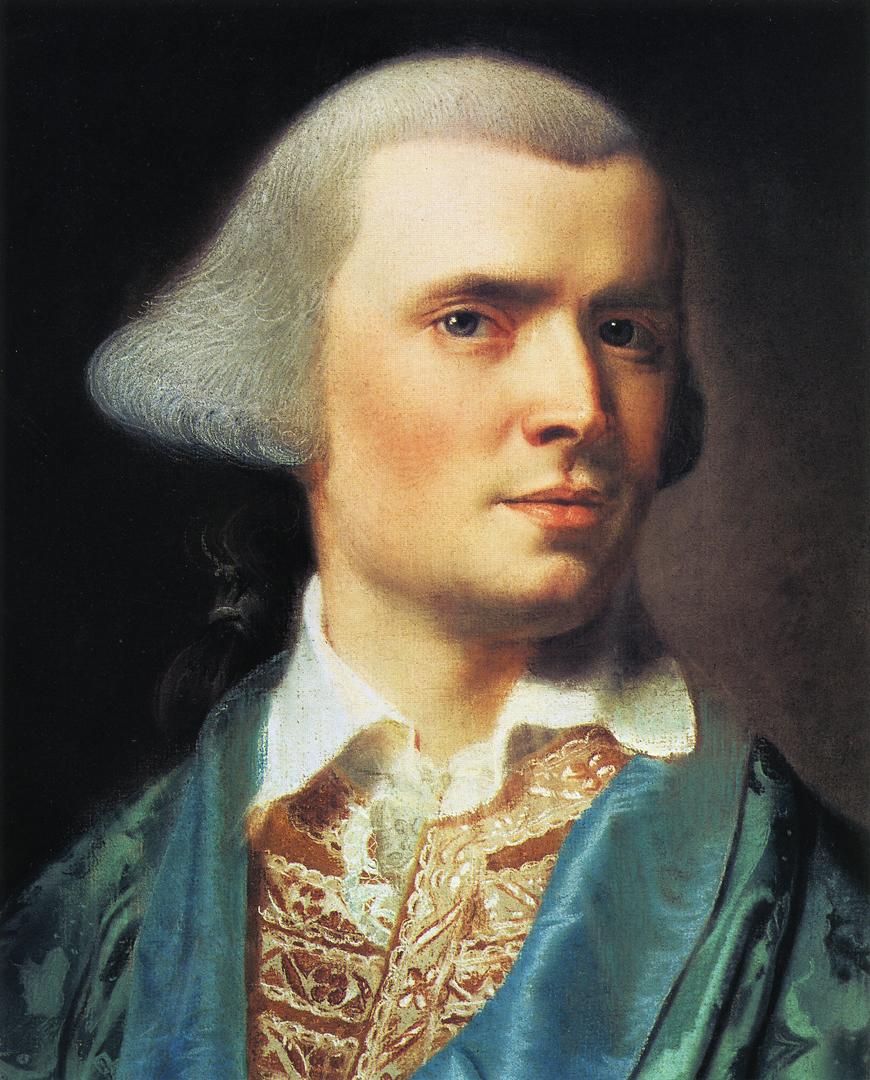
John Singleton Copley stands as the foremost American artist of the eighteenth century. At a time when Americans were widely regarded in Europe as provincial brutes, he nonetheless earned an honored place among the leading artists of the continent. His life was divided almost evenly between two worlds: the first thirty-seven years in Boston, and the final forty years in London. Alfred Frankenstein captures his and times well in The World of Copley: 1738-1815 (1970) in the Time Life Series of great artists.
Art in eighteenth-century America was limited in scope and ambition. The author highlights four notable pre-Copley artists. John Smibert moved to Boston in 1729, reportedly reasoning that he would rather be great in Boston than merely average in London. Robert Feke arrived in Boston in 1741 with an elegant and refined style, but disappeared from the record around 1750. John Greenwood then held a near-monopoly on the Boston portrait market after Smibert’s death and Feke’s departure. Finally, Joseph Blackburn began painting portraits in Boston around 1755 but may have left by 1763, perhaps driven away by the rising competition of John Singleton Copley.
John Singleton Copley was born in Boston in 1738, the only child of a tobacco shop owner whose store stood near Long Wharf. The future artist likely never knew his biological father, but his stepfather, Peter Pelham, had a profound influence on his early life, even though the marriage lasted only three years before Pelham’s death. The newly blended household included four sons and a daughter from Pelham’s first marriage, along with a son born to Pelham and Copley’s mother. Pelham worked as an engraver and introduced the ten-year-old Copley to art as a profession.
The year 1751 proved pivotal for the young artist. At just thirteen, Copley lost his stepfather, Pelham, as well as the leading Boston painter of the day, John Smibert. Within a year, the city’s other prominent artists – Robert Feke and John Greenwood – also disappeared from the Boston scene. Their departures left a remarkable artistic vacuum in the colony at precisely the moment Copley was beginning his career.
John Singleton Copley was something of a prodigy. At just fifteen, he completed his first commissioned portrait – a likeness of a tavern keeper’s wife. Although portrait painting ranked near the bottom of the artistic hierarchy in eighteenth-century Europe, it was the most popular form of art in Puritan Boston, where there was little appetite for the classical or biblical scenes favored by European artists. On the one hand, John Singleton Copley possessed a remarkable talent for capturing the character and presence of his sitters. At the same time, he borrowed freely from engravings of well-known European paintings, which served as sources of stylistic cues and compositional ideas. Many Boston clients even requested to be portrayed in the poses and formats of famous portraits – particularly those associated with European aristocracy and royalty.
By the time John Singleton Copley turned twenty, he had produced some forty portraits. His clients were no longer tavern keepers’ wives but the daughters of British commodores and other members of Boston’s elite. In 1766, Copley sent a portrait of his half-brother, Henry Pelham, to be exhibited in London – an event Frankenstein suggests marked the great turning point in Copley’s career.
In 1769, Copley married Susanna Clarke, the daughter of one of Boston’s wealthiest merchants and the local agent of the British East India Company. Their marriage would last forty-five years and produce six children. The union also symbolized Copley’s remarkable ascent up Boston’s social ladder – from the son of a modest tobacconist to the son-in-law of one of the city’s most powerful and affluent men.
Copley tended to socialize within Tory circles, largely because they possessed the wealth and influence to commission expensive portraits. Even so, he carefully avoided political entanglements. Writing to his friend and fellow artist Benjamin West, Copley remarked that politics was “neither pleasing to an artist nor advantageous to the art itself.”
In 1771, Copley spent seven months in Manhattan, where he produced thirty-seven portraits, largely for British military officers and local officials. Despite his efforts to remain apolitical, Copley was reluctantly drawn into the vortex of colonial politics during the tensions leading up to the Boston Tea Party. His father-in-law, Richard Clarke, was one of five merchants designated to receive the controversial tea shipments, and Copley was briefly used as a go-between in attempts to defuse the growing crisis.
Not long afterward, a Boston mob descended on Copley’s Beacon Hill home searching for a British army officer who had recently dined there. The escalating threat of violence finally convinced Copley to leave the colonies for London in June 1774. By the time of his departure, he had completed roughly 350 portraits, of which 312 are known to survive.
Copley’s great rival among American-born artists was Benjamin West (1738–1820). Raised as a Quaker in Philadelphia, West pursued art as an expression of his God-given “Inner Light.” Unlike John Singleton Copley, he traveled to Europe early in life, arriving in Rome in 1760 at the age of twenty-two. After several years in Italy, he moved to London in 1763 and would never return to America.
West eventually became one of the most respected court painters to George III. In 1768, the king helped establish the Royal Academy of Arts, which supported forty of the leading artists in England. West’s reputation there ranked second only to that of Joshua Reynolds, whom he later succeeded as president of the Academy. Over the course of thirty-two years, West completed seventy-five royal commissions, including the celebrated painting The Death of General Wolfe. He specialized in dramatic historical scenes that emphasized courage and moral virtue, rendered in a balanced Neoclassical style. A hallmark of his compositions was the “bridge formula,” in which the principal figures appear across the center of the canvas in a frieze-like arrangement, surrounded by open space that directs the viewer’s attention to the central action.
West maintained a close relationship with George III, yet he was also an avowed supporter of both the American Revolution and the French Revolution – a combination that seems remarkable. West’s prestige and influence at court, however, declined as George III gradually descended into madness.
Copley quickly developed a reputation in London as a boorish, self-assured American – someone always looking out for the main chance. According to the author, this self-absorbed personality ultimately counted heavily against him in London and contributed to the decline of his career.
Copley learned of the outbreak of the American Revolution while in Parma during his return journey to London. He was reunited with his family there in October 1775. According to the author, Copley was convinced that the patriots would ultimately prevail.
Copley’s relationship with West – and with much of academic Britain – grew strained following his 1781 painting The Death of the Earl of Chatham. Like West’s famous The Death of General Wolfe, it was a historical scene, but Copley’s treatment was far more immediate and documentary in spirit. The painting included the likenesses of fifty-six individuals who had been present in the House of Lords when William Pitt the Elder rose in April 1778 to protest a speech by Charles Lennox calling for George III to withdraw British troops from America and recognize its independence. Chatham collapsed during the debate and soon died from a stroke.
With this work, Copley effectively created a new hybrid genre – combining historical painting with a large-scale group portrait. He also took the unusual step of exhibiting the work not at the Royal Academy of Arts but through a ten-week paid exhibition that attracted some 20,000 spectators. Copley painted the work on speculation rather than commission and also produced an engraved version that secured 2,500 advance subscriptions. Despite this early attention, however, the monumental canvas never brought him lasting financial success; three decades later he was forced to dispose of it through a raffle for a modest sum.
West and Copley helped inspire the next great generation of American artists, including John Trumbull, Charles Willson Peale, Gilbert Stuart, and Samuel F. B. Morse. Like West and Copley before them, each traveled to Europe to study the works of the great masters, though all eventually returned to the United States.
Trumbull’s career was especially dramatic. He served in the American Revolution before traveling to London at the age of twenty-four while the war was still underway. There he was arrested and imprisoned for seven months as a suspected American spy. After his release, he studied in West’s studio before finally returning to the United States in 1804 at the age of forty-eight. Trumbull achieved his greatest fame in 1816 when he was commissioned to paint four large historical murals for the United States Capitol Rotunda.
Gilbert Stuart was America’s premier portraitist, specializing almost exclusively in that genre. Like several of his contemporaries, he spent five formative years studying in the London studio of Benjamin West. Notoriously profligate and undisciplined, Stuart was frequently in debt and often relied on producing multiple versions of his most famous portraits—especially those of George Washington – as a steady source of income.
Stuart reportedly painted around 110 portraits of Washington, including replicas and variations. These works became some of the most recognizable images in American art. Among the most famous is the unfinished Athenaeum Portrait of George Washington, created during Washington’s third sitting with the artist. The image later served as the model for the portrait that has appeared on the U.S. one-dollar bill for generations.
Charles Willson Peale was arguably an even more accomplished portraitist than Gilbert Stuart – more formal and polished in style – and painted many of the leading figures of the American founding generation. Born in Annapolis, he began life as an impoverished saddle maker but, by his mid-twenties, had committed himself to a career as a professional portrait painter. Like several of his contemporaries, Peale traveled to London to study, spending two years in the studio of Benjamin West about a decade before Stuart arrived there.
Peale’s interests extended far beyond painting. A man of wide curiosity, he founded one of the first great natural history museums in the United States, later known as the Peale’s Museum. His personal life was equally expansive: he married three times and fathered seventeen children.
Samuel F. B. Morse is remembered today primarily as the inventor of the telegraph, but he began his career as an artist. He studied in Benjamin West’s studio in 1811 and later spent several years in Paris, often lingering in the halls of the Louvre, studying the works of the Old Masters.
Together, Copley, West, and their successors – Trumbull, Peale, Stuart, and Morse – laid the foundation for a distinctly American artistic identity. Each traveled to Europe to absorb the lessons of the Old Masters, yet all returned to the United States to apply their skills to the new nation, capturing its leaders, values, and historical milestones. They bridged the gap between European academic traditions and the practical, civic-minded demands of a young republic, establishing a legacy of portraiture, historical painting, and artistic innovation that would influence generations to come. In doing so, they not only elevated the status of American art but also ensured that the stories, faces, and ideals of the early United States would endure visually for posterity.
 What's Tim Reading Now?
Leave a comment