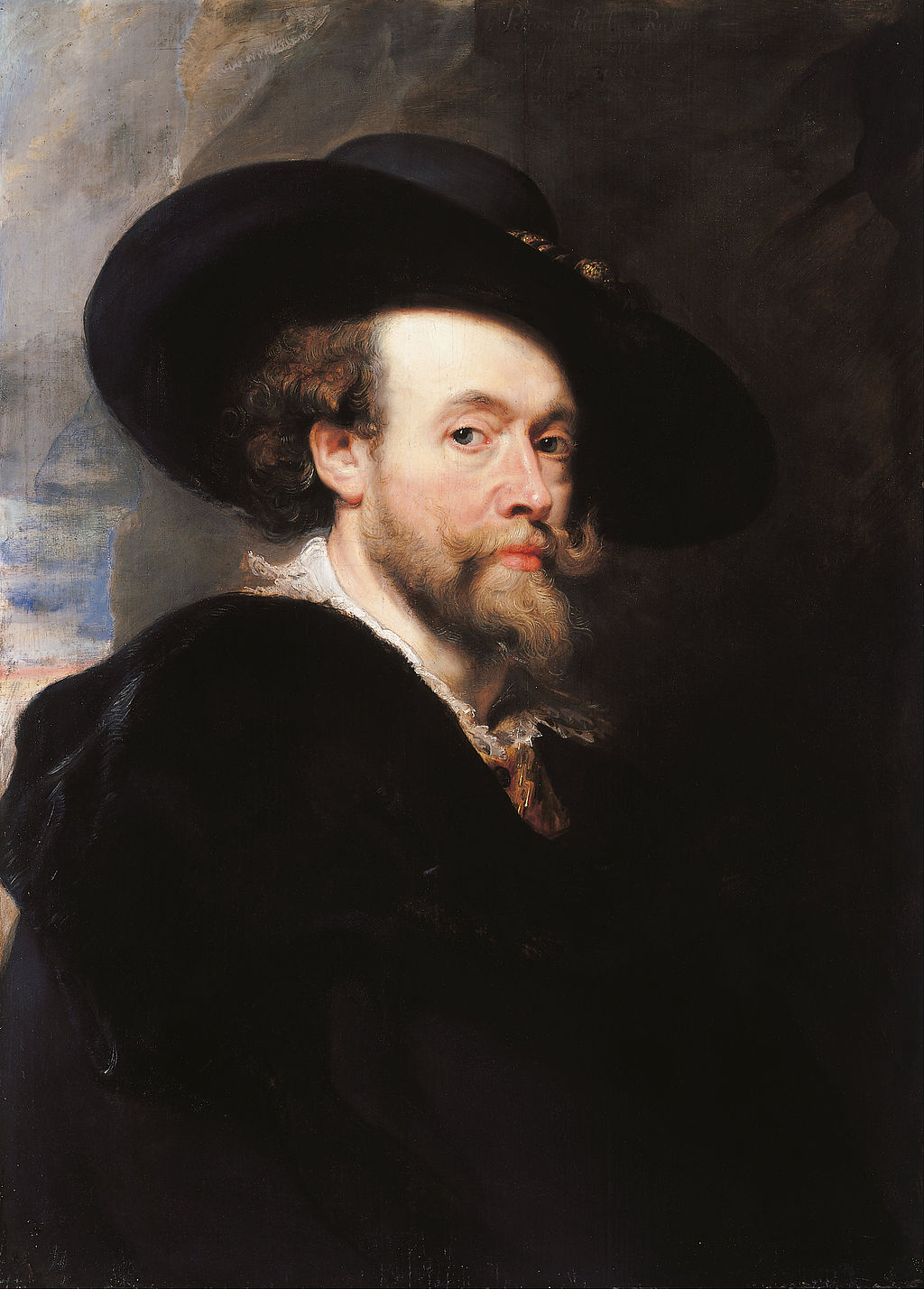
Flemish/Belgian artist Peter Paul Rubens had it all: looks, health, grace, and genius. After an 8 year sojourn in Italy working for the Duke of Mantua, he was influenced particularly by Titian, but also Tintoretto and Veronese, and Raphael’s pupil Giulio Romano.
Rubens brilliantly synthesized the style of Italian and Dutch art into something entirely new: the Baroque, a style marked by vitality, passion and brilliant colors, but which has also become shorthand for overdone or needlessly complicated. Rubens was the widely recognized during his lifetime as the grandiose Baroque master.
An ardent Catholic, Rubens would create many works for the Jesuits and created many sweeping pictorials from biblical stories and battles between man and beast. He was known as “the prince of painters and the painter of princes” and also regularly served as diplomatic envoy and spy on his many missions to foreign courts.
His output was massive — there are 1,403 authenticated paintings by Rubens around the world today.
 What's Tim Reading Now?
Leave a comment