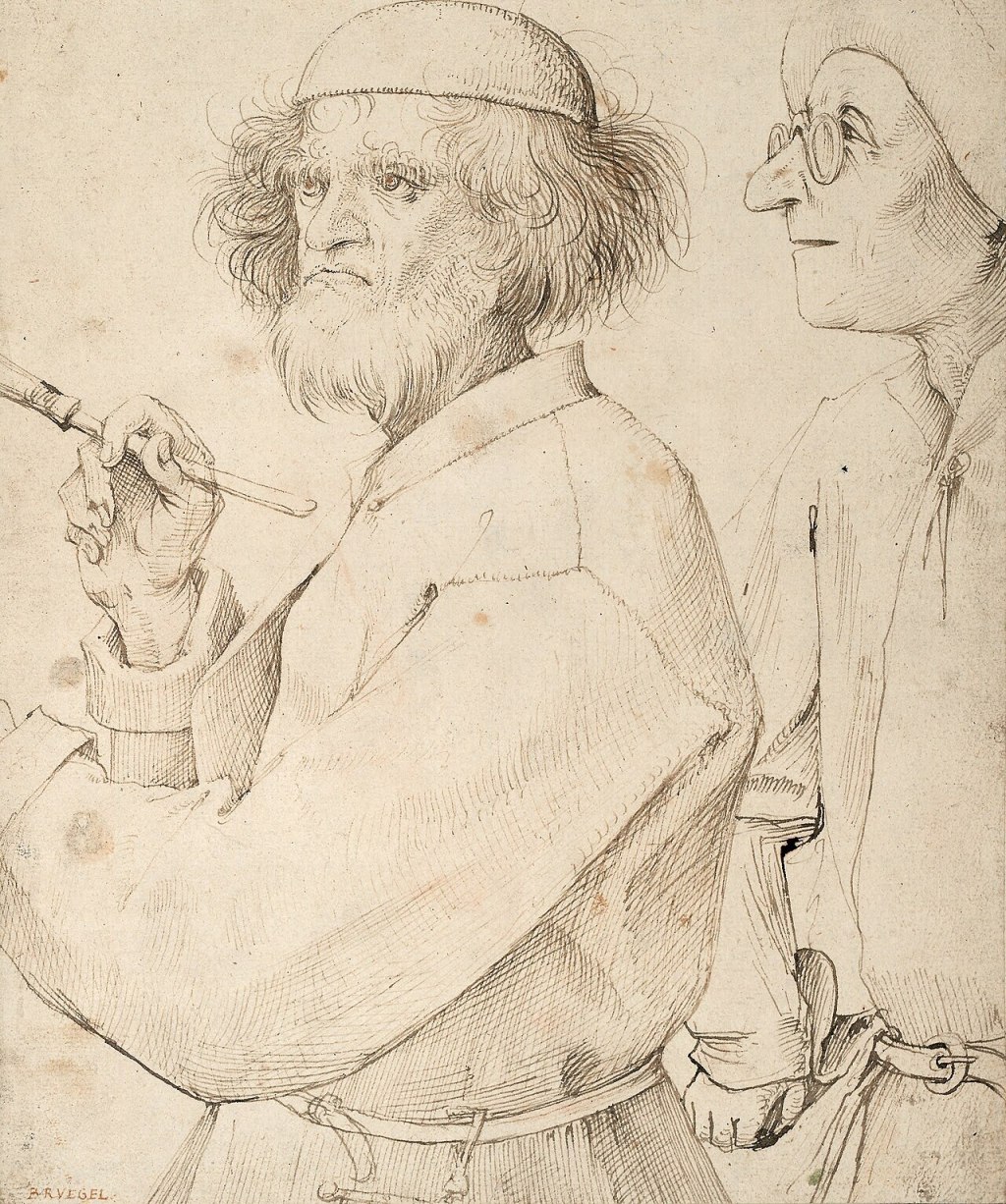
Pieter Bruegel is celebrated for shifting the focus of art from the divine to the human, from the heroic to the humble, and from the exceptional to the everyday, which is how he earned the nickname “Peasant Brueghel.” Whereas the Italian High Renaissance was optimistic and saw man as large, idealized, and heroic, the Northern Renaissance was pessimistic and saw man as small, salacious, and an incorrigible sinner.
Bruegel broke from the dominant religious and aristocratic subjects of his time to center rural peasants in their daily activities. This shift reflected and shaped a growing humanist interest in everyday experience during the Northern Renaissance. It has been argued that he was a pioneer rather than a revolutionary, a particularly when it came to reflecting pious realism in his paintings.
His paintings are often filled with dozens or hundreds of figures (called Wimmelbilder or “teeming-people picture”), each performing individual actions that cumulatively tell a broader story. Many of his paintings were didactic and depicted popular Dutch proverbs and idioms (e.g. “His head is as hollow as an eggshell”) to tell a morality tale. This made his work richly allegorical and intellectually engaging, encouraging viewers to decode the layers of meaning. He often placed tiny figures in vast, overwhelming natural settings, emphasizing man’s smallness within the world. Brueghel painted proverbs, drew human caricatures and exposes man’s folly with more detail than anyone in his or any other age.
Bruegel was one of the first European painters to make the landscape itself a central subject, not just a backdrop. Half of Brueghel’s existing paintings are some form of landscape. His depictions of seasons, weather, and terrain helped lay the foundation for the landscape genre in Western art; he did more than any other painter to free landscape from dependence on religion.
He critiques folly, pride, and greed (The Blind Leading the Blind, The Triumph of Death) but avoids the harshness or religiosity common in earlier art. He was also shaped by the brutal war of independence from Spain and the Hapsburg King Philip. His style was a unique blend of Flemish, Italian Renaissance and Mannerism. He was never a court painter and never did a nude or portrait. Only one of his pieces is known to have been done on commission.
There are only around 45 authenticated paintings by Pieter Bruegel known to have survived to this day. His work quickly fell out of fashion after his death in 1569 and remained generally forgotten until the 20th century.
 What's Tim Reading Now?
Leave a comment