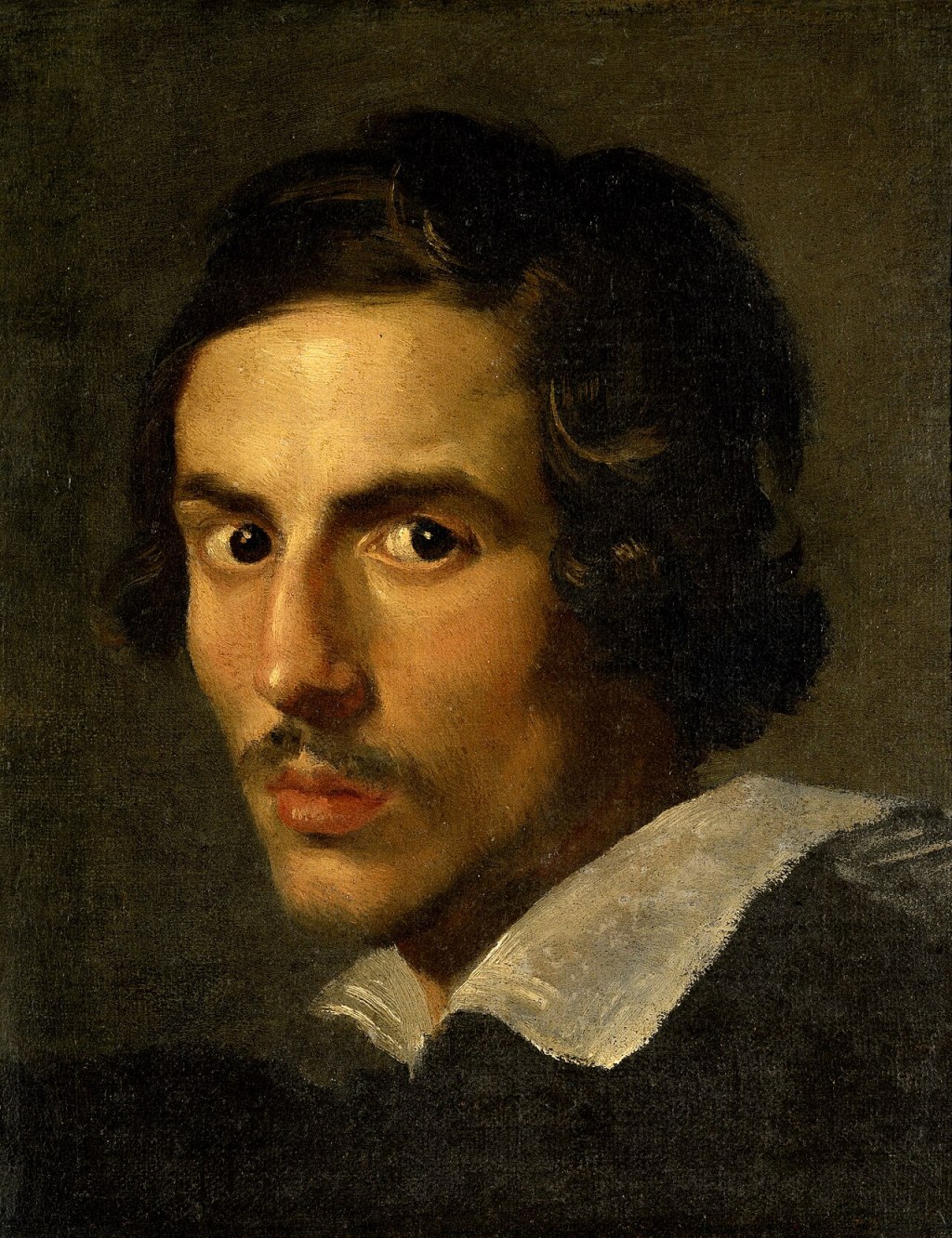
Bernini was a child prodigy and the greatest artist (possibly the greatest man) of his day, internationally famous by age 35, possessing the virtuosity of Leonardo and Michelangelo. He left an extensive and indelible mark on Rome, the only city he ever knew, especially St Peter’s Basilica, completed in 1626, where Bernini was responsible for its beautification from 1629 to his death in 1680. Bernini was the personification of 17th century Baroque, but his reputation collapsed in the centuries after his death.
Bernini’s style, greatly influenced by the naturalism and emotion of Caravaggio (1571-1610), changed the course of European sculpture. Rather than depicting subjects in the midst of activity without any sense of imminence, as was the case with most classical and Renaissance sculptures (e.g. the disc thrower winding up), Bernini caught the climactic moment (e.g. Daphne metamorphosis into a tree) with intense realism. Capturing an intense instant was Bernini’s artistic credo.
Bernini was an extraordinarily devout Catholic and was deeply influenced by the Jesuits, whose meditations called on the faithful to closely imagine the sounds, smell, heat and feeling of hell, among other conjurings of intense feeling, such as divine mercy, that Bernini used to infuse his art with lifelike emotion.
He is regarded as perhaps the greatest and most prolific portrait sculptor in history (33 in marble and 8 in bronze survive; he made at least 9 portraits alone of Urban VIII). His busts were noted for their hints of animation, expression of vivid emotions, and creating the illusion that the busts were taken from full length.
Bernini served eight popes during his lifetime (carving busts of most of them), but he benefited most from the patronage of Pope Urban VIII (r. 1623-1644), the greatest supporter of art in the 17th century and possibly the most sophisticated men ever elected pope. Urban gave Bernini over 30 commissions and several lucrative posts during his 21-year pontificate. Unusual for an artistic genius, Bernini was also a superb administrator and good with money. By his 50s, his art and fiscal responsibility had made him quite wealthy.
Bernini could master any technique or medium, including plays and stage design. Bernini contributed enormously to St Peter’s Basilica over a 54 year period, including the patterned marble floors, the massive, 9-story tall baldachin over St Peter’s grave (the world’s first great baroque monument, which took almost a decade to complete), the St Angelo bridge over the Tiber, and the colonnades around St Peter’s piazza.
Bernini never regarded painting as more than a diversion, but is said to have produced 150 to 200 paintings during his life, only a dozen of which survive. From 1624, when he began work for Urban VIII, till his death in 1680, all of his major works included significant contribution by other artists from his studio.
 What's Tim Reading Now?
Leave a comment