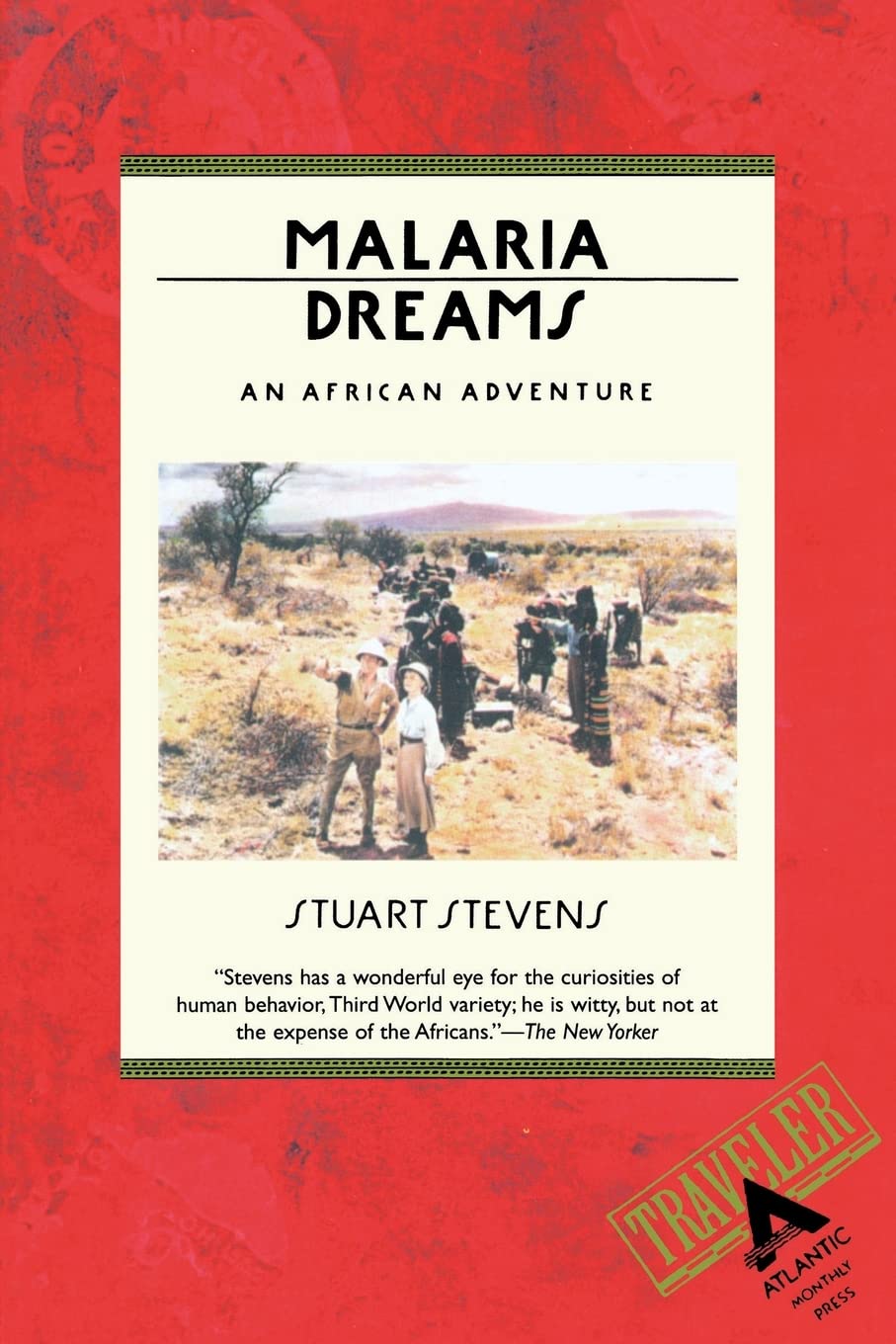
My in-laws were medical missionaries in north east Cameroon back in the late 1990s. They were urged to read this travelogue as a preparation for life in sub Saharan Africa. I read it for fun, mainly because after flipping through a few pages I realized that it was a lot like the blog I kept during my year of military service in southern Afghanistan.
Some reviewers object to the author’s depiction of Africa and Africans, which tends to revolve around omnipresent graft and simple anomie. I’ve never been to Africa and can’t comment one way or the other. However, it wouldn’t surprise me if veteran African hands roll their eyes at the dramatic tone applied to many of Stevens’ adventures during his hundred day journey from Central Africa Republic (CAR) to Algeria by way of Cameroon, Niger and Mali, with a large dash of the Sahara Desert along the way.
What I loved about the book – admired to tell you the truth – was Stevens’ ability to capture characters and events, often with uproarious, self-deprecating hilarity. The novelist Don De Lillo, one of our country’s greatest prose stylists, once described his profession modestly as: “I write sentences.” And Stevens’, like De Lillo, writes wonderful sentences: balanced, original, insightful, often playful. I found myself slowly re-reading his character introductions and metaphors with a mix of respect and envy. I don’t think I would have had the same appreciation for his skill had I not attempted to do the same thing, only writing about Afghan tribesmen and western military bureaucracy instead of African tribesmen and African governmental bureaucracy.
The narrative that drives the story – Stevens attempt to rescue a friend’s Land Rover from CAR – is something like what Alfred Hitchcock called a MacGuffin in a great film: a plot element that catches the viewers’ attention or drives the plot. In the end, what happens to the MacGuffin, the Land Rover or the Maltese Falcon or whatever, really doesn’t matter; it’s the characters and their experiences and conflicts that captivate the audience. Such is the case with “Malaria Dreams.” Much of the story itself is borderline preposterous. A guy who seeks to rescue a Land Rover from the clutches of government officials in CAR for an acquaintance back in the US he barely knows? And who undertakes the odyssey with an attractive young woman even though he’s married and she has a fighter pilot boyfriend?
But all of this is ultimately beside the point, at least for me. I loved the writing, and that’s all I need.
 What's Tim Reading Now?
Leave a comment