Author: Tim Graczewski
-
SPQR: A History of Ancient Rome (2015) by Mary Beard
A ubiquitous commentator on affairs both ancient and domestic in her native Great Britain, Mary Beard is something of an institution. Her latest written work, SPQR, is an interpretive history of ancient Rome aimed at a lay audience. Beard eschews a strictly chronological narrative in favor of a more thematic approach, peppering her history with…
-
Rome and the Enemy: Imperial Strategy in the Principate (1999) by Susan P. Mattern
By the end of the second century AD, Rome held political sway over much of the civilized world. In some places, such as northern Britain or eastern Europe, the limits of the empire were clearly demarcated by defensive walls or natural boundaries like rivers. In most places, however, Roman authority simply stretched on amorphously into…
-

Castles of Steel: Britain, Germany, and the Winning of the Great War at Sea (2003) by Robert K. Massie
Robert Massie is a genius. He writes long, but beautifully, crafting narratives that are compulsively readable while creating characters with the skill of a novelist. His scholarship is intensely detailed – the Battle of Jutland alone takes up 130 pages of text – but fluid and engaging. “Castles of Steel” is the sequel to his…
-

The Great Edwardian Naval Feud: Beresford’s Vendetta against ‘Jackie’ Fisher (2009) by Richard Freeman
The early twentieth-century naval reforms of Sir Jackie Fisher are a favorite topic of contemporary political scientists and defense policy wonks, alike. Fisher’s personal story and the drama around his relationship with his great rival, Lord Charles Beresford, are less well known or understood. At first glance, I was doubtful that a century-old bureaucratic political…
-
From the Dreadnought to Scapa Flow: The Road to War 1904-1914 (Volume 1) (1961) by Arthur J. Marder
First published in 1961, Arthur Marder’s “From the Dreadnought to Scapa Flow” set the standard on scholarship of the Royal Navy in the First World War era for over a generation. To this day, no commentary on the period can be presented without noting its relationship to Marder and his classic multi-volume work. Part one…
-
In Defence of Naval Supremacy: Finance, Technology, and British Naval Policy, 1889-1914 (1989) by Jon Tetsuro Sumida
At the turn of the century, the cost of naval warship production was spiraling out of control. New technologies and sophistication had doubled the cost of battleships and first class cruisers. Moreover, the ships were growing in size, requiring more crew and substantial upgrades to port facilities. Navy estimates of 22 million pounds in 1898…
-
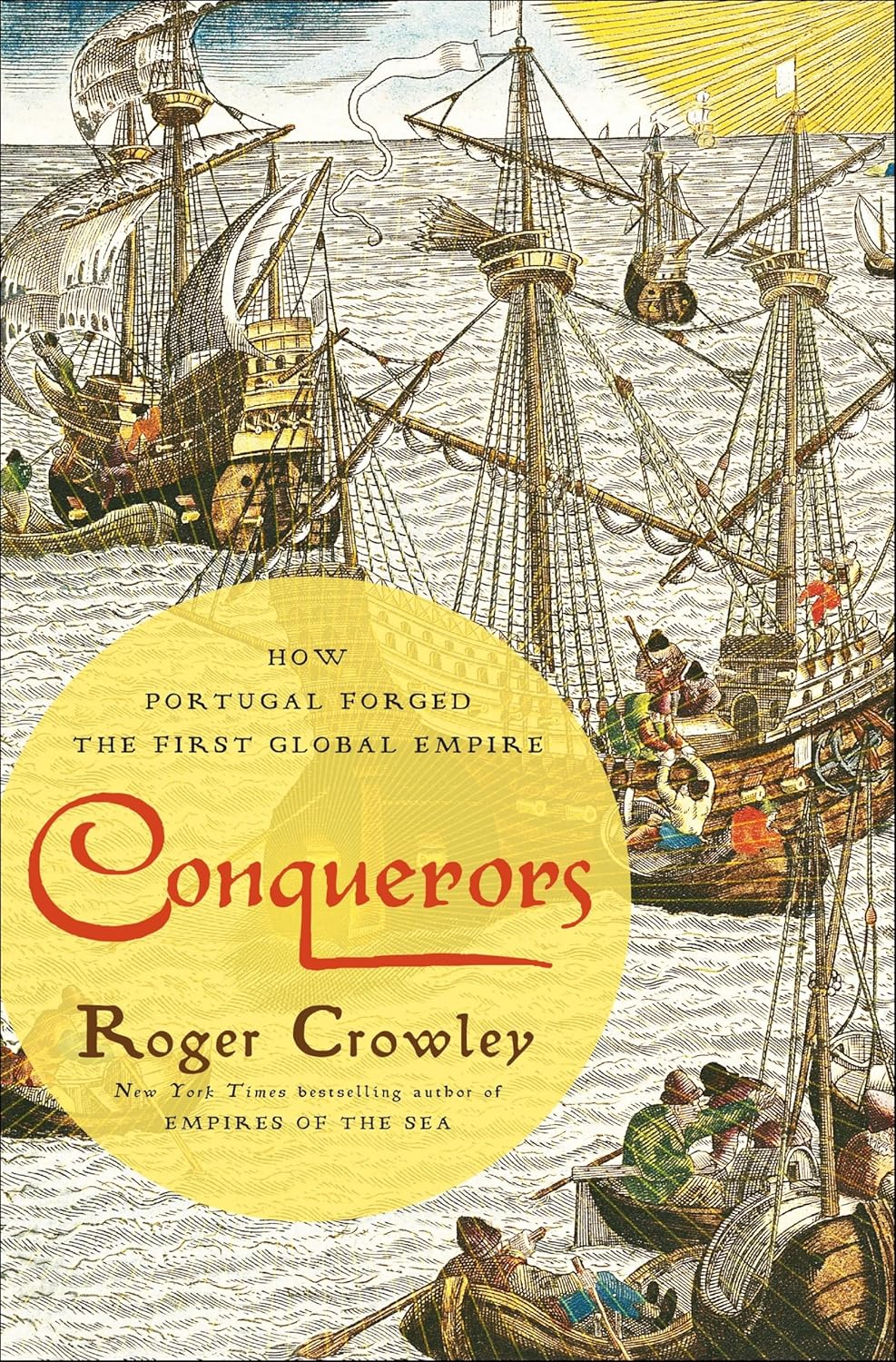
Conquerors: How Portugal Forged the First Global Empire (2015) by Roger Crowley
Everyone knows that in 1492 Columbus sailed the ocean blue. Less well known, but dramatically more important in the near term, Vasco da Gama sailed around Africa and into the Indian Ocean in 1498. It was a triumph of seafaring and endurance that had the effect of a hydrogen bomb being dropped on the vibrant…
-

The People’s Tycoon: Henry Ford and the American Century (2005) by Steven Watts
Henry Ford may very well be greatest entrepreneur in American history. Few have had a greater impact on their time and culture the way Ford did in early twentieth century America. There are many biographies available on Ford, but “The People’s Tycoon: Henry Ford and the American Century” by Steven Watts may be the very…
-

All the Shah’s Men: An American Coup and the Roots of Middle East Terror (2008) by by Stephen Kinzer
In August 1953, the democratically elected prime minister of Iran, Mohammed Mossadegh, was overthrown in a clumsy coup d’état orchestrated by the infant Central Intelligence Agency. Veteran journalist Stephen Kinzer expertly tells this outrageous story of subterfuge in “All the Shah’s Men.” For Kinzer the episode is a cautionary tale of western meddling in Middle…
 What's Tim Reading Now?