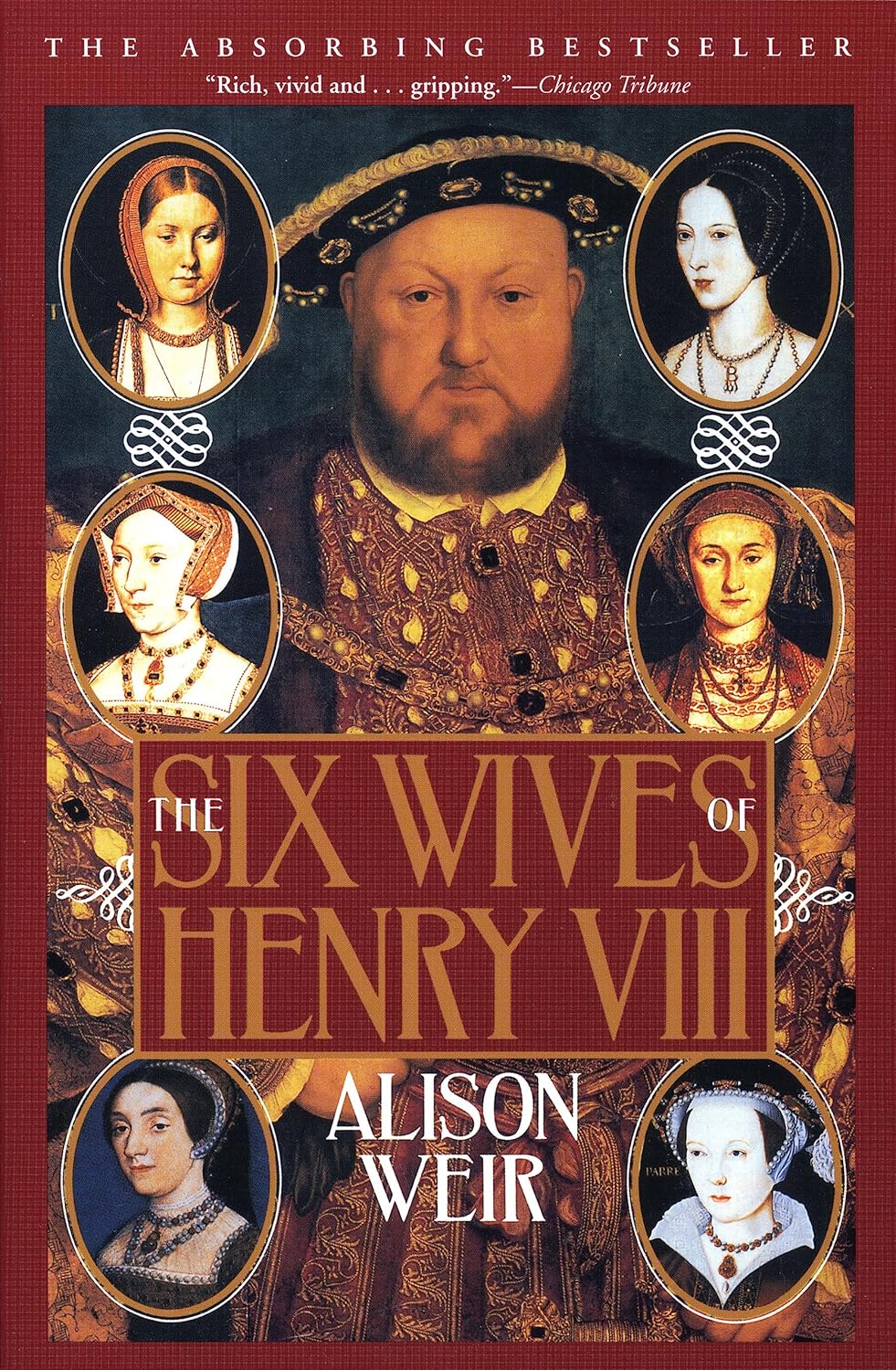
I first discovered this book in a box of donated books at a forward operating base on the Afghan-Pakistan border in 2010. Imagine my surprise when it turned out to be one of the most entertaining works of history I’ve ever picked up. Alison Weir has an unusual knack for putting flesh-and-bones on long dead Englishmen and making their stories somehow relatable. “The Six Wives of Henry VIII” is a richly detailed, compellingly written chronicle of one of the most dramatic periods in English history. With the narrative sweep of a novelist and the rigor of a historian, Weir dives deep into the personal, political, and religious complexities surrounding King Henry VIII and the six women who shared his throne. More than just a salacious catalog of romantic entanglements, Weir’s work explores the tangled web of dynastic ambition, personal tragedy, and theological revolution that made Henry’s matrimonial life the fulcrum upon which the fate of Tudor England turned and the rest of Europe obsessed about.
From the outset, Weir sets out to re-center the narrative around the six women who have long been overshadowed by the outsized figure of Henry himself. Yet Henry, too, receives careful treatment as a nuanced, if ultimately tragic, monarch whose personal desires and political decisions helped tear apart Christendom and usher in the English Reformation.
The book is structured chronologically, beginning with Catherine of Aragon (1485-1536), the Spanish princess who was Henry’s wife for over twenty years and the daughter of the powerful Catholic monarchs Ferdinand and Isabella. Weir paints Catherine as dignified, devout, and politically astute. Despite enduring multiple stillbirths and only bearing one surviving child, the future Queen Mary I, Catherine maintained a resolute commitment to her role as Queen. Weir is sympathetic to Catherine, portraying her as a tragic figure caught in the crosshairs of a religious and political storm not of her own making. The pope’s refusal to annul her marriage was not simply a question of theological doctrine but deeply entwined with the fear of antagonizing her nephew, Charles V, the Holy Roman Emperor. Thus began the “King’s Great Matter,” the political and spiritual crisis that would lead to the English break with Rome.
Anne Boleyn (1501-1536), Henry’s second wife, receives one of the most complex portrayals in Weir’s book. Far from the seductress or martyr of legend, Weir presents Anne as ambitious, intelligent, and politically engaged. Anne’s refusal to become Henry’s mistress and her demand for marriage was not only a personal strategy but a political gamble that paid off – at least temporarily. Weir shows Anne as a key catalyst in the Reformation, supporting religious reformers and encouraging Henry’s assertion of supremacy over the Church in England. However, Anne’s inability to provide a male heir and her polarizing court personality ultimately led to her downfall. Her arrest, trial, and execution on charges of adultery, incest, and treason are depicted with particular pathos and a keen sense of injustice, as Weir questions the validity of the evidence and motives of Anne’s enemies.
The third wife, Jane Seymour (1508-1537), is often presented by historians as Henry’s ideal queen: quiet, obedient, and fertile. Weir goes beyond this simplistic reading, offering a portrait of a woman who, while personally reserved, was shrewd in her timing and presentation. Jane succeeded where Anne failed by giving birth to a male heir, the future Edward VI, and her death shortly thereafter elevated her in Henry’s memory as the perfect consort. Weir suggests that Jane’s intercession for the rebels during the Pilgrimage of Grace and her diplomatic comportment suggest a more substantial political mind than previously credited.
Anne of Cleves (1515-1557), Henry’s fourth wife, is perhaps the most misunderstood, and Weir does much to rehabilitate her image. Often remembered merely as the bride Henry found unattractive, Anne emerges here as a gracious and politically savvy woman. Weir carefully outlines the complex negotiations that led to the Cleves marriage, intended as a Protestant alliance to counter Catholic threats. The marriage was annulled after only six months, but Anne managed to secure a generous settlement and remained in England, living in comfort and avoiding the dangerous intrigues that consumed so many at court. Weir admires her pragmatism and survival instinct.
Katherine Howard (1523-1542), the fifth queen and a cousin of Anne Boleyn, receives a less flattering portrayal. Weir paints a picture of a young, poorly educated girl thrust into a position she was ill-equipped to manage. Her prior romantic entanglements and subsequent affair with Thomas Culpepper are detailed with both empathy and criticism. Weir underscores Katherine’s youth and the political exploitation by her ambitious Howard relatives. Nevertheless, her imprudence and lack of discretion sealed her fate. Her execution, coming six years after Anne Boleyn’s, demonstrated the continued volatility of Henry’s court.
Finally, Catherine Parr (1512-1548), Henry’s sixth and final wife, is depicted as a woman of intellect, compassion, and remarkable political skill. Twice widowed before marrying Henry, Parr was deeply educated and a committed reformer. Weir emphasizes her role as a stabilizing influence in Henry’s final years, a stepmother who nurtured his children and promoted Protestant causes. Her near arrest for her religious views and her deft political maneuvering to avoid downfall show the danger that even a “safe” wife could face.
Weir does not merely recount the events of these marriages but places them firmly within the broader context of the Protestant Reformation and the political machinations of European diplomacy. Henry’s initial desire for a male heir was not merely a personal fixation but a legitimate dynastic concern in an era when female succession was viewed as potentially destabilizing. Pope Clement VII’s refusal to annul Henry’s marriage to Catherine of Aragon must be seen in the light of the Vatican’s complex relationship with the Habsburgs, especially Emperor Charles V, Catherine’s nephew. Thus, Henry’s break from Rome was not just a romantic rebellion but a seismic political act that redrew the map of religious authority in Europe.
One of Weir’s greatest strengths is her attention to detail and her use of contemporary sources. She brings alive the personalities, clothing, food, daily routines, and emotional lives of her subjects. Her balanced approach avoids both hagiography and vilification. She is critical of Henry’s tyranny and capriciousness, but also acknowledges his intelligence, charisma, and political acumen. The six wives are not merely victims or pawns; they are women of agency, shaped by their times and making the most of their circumstances.
Ultimately, “The Six Wives of Henry VIII” endures as a seminal work in Tudor historiography. It has been widely praised not only for its readability and depth but also for shifting the focus of Tudor history toward the women at its heart. Alison Weir’s scholarship helped pave the way for a more inclusive and humanized view of history, demonstrating that the lives of queens, often dismissed as footnotes, were central to the political and religious transformations of their era.
For readers interested in the Tudor period, gender politics, or the intersection of personal and political power, Weir’s book offers a master class in historical biography. It reminds us that the personal lives of rulers can have world-changing consequences, and that behind every throne, there is a story worth telling in full.
 What's Tim Reading Now?
Leave a comment