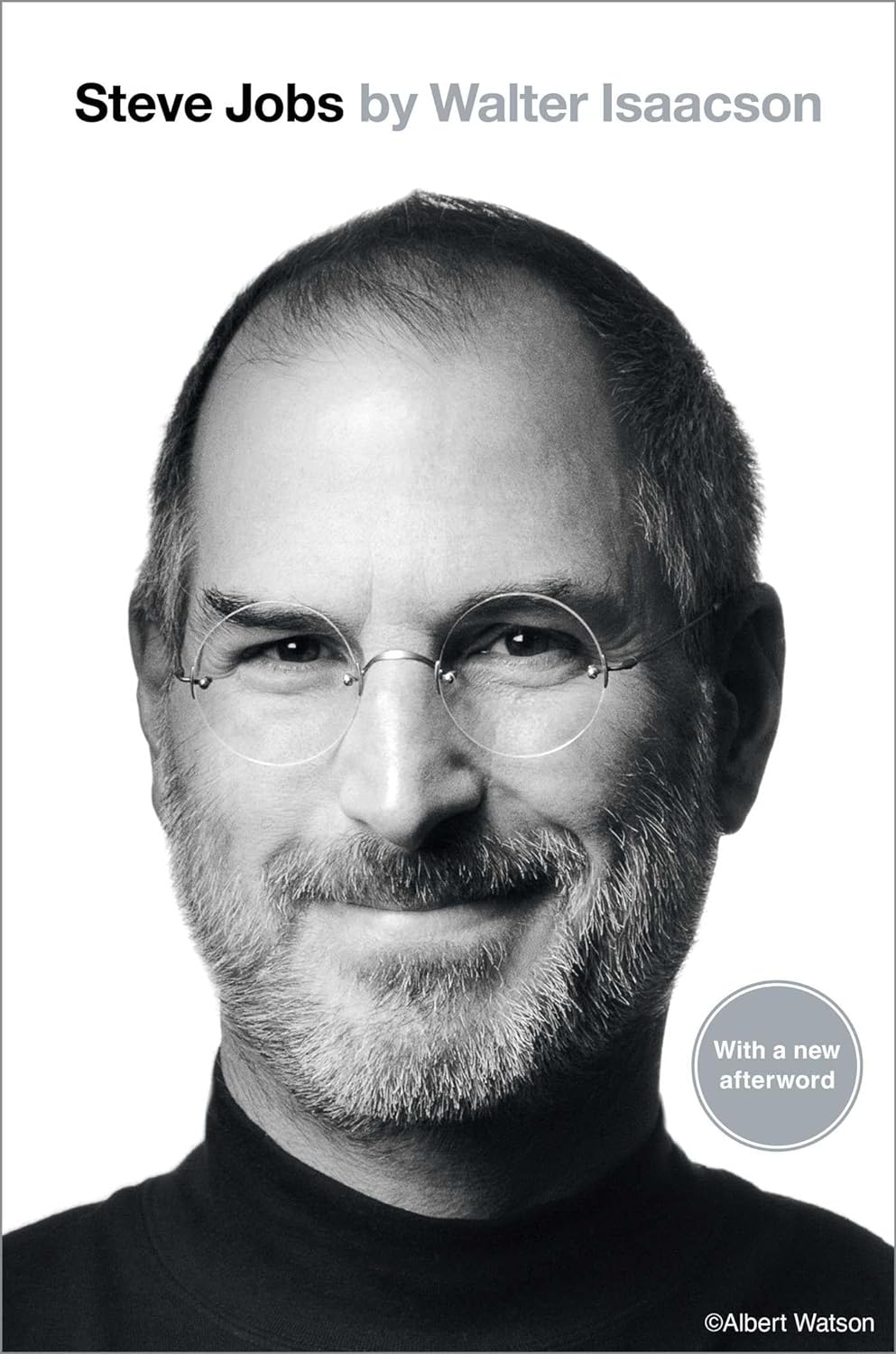
Few works of non-fiction have been as eagerly anticipated and commercially successful as Walter Isaacson’s “Steve Jobs,” which hit bookstores a mere 13 days after the iconic tech leader succumbed to cancer in October 2011. Despite its blockbuster status, reviews were somewhat mixed, which (in my opinion) is inevitable when a biography appears on a contemporary and controversial figure. Among those most displeased, I learned, were those closest to Jobs, believing that Isaacson was excessively harsh on the famously arrogant and prickly Apple CEO.
Personally, I really enjoyed this book, although it is far from perfect. I live in Silicon Valley and have worked in the tech industry for over a decade, including with many people who were close friends of Jobs and some of whom who were tossed overboard by him (“bozos”, in other words, according to Jobs). My gut feeling is that “Steve Jobs” rings incredibly true, capturing the legitimate genius and deep character flaws of the subject. Isaacson should be commended for producing an extensive, original and genuinely objective piece on someone who was legendary for creating a “reality distortion field.” Indeed, Isaacson notes that Jobs frequently flattered and cajoled him to promote the latest Apple product when the author was a senior editor at TIME magazine.
Although Isaacson doesn’t lay it out this way, there are three core elements to this book: 1) it is a history of the digital revolution that exploded out of Silicon Valley in the 1970s and 80s and which Jobs did much to create and shape; 2) it highlights a fundamental and serious question about the focus of technology businesses today, not just the open versus closed system debate, but more importantly the product and design first mindset of senior leadership versus those with an engineering or sales perspective; and 3) there is the subject of Steve Jobs himself, a fascinating and enigmatic personality, one who could keep a platoon of psychoanalysts busy for years.
First, this book is a history of the personal computer industry and the revolutions that Jobs led in everything from digital music to smart phones and tablets to computer animation and retailing. Many of the leading figures of the information age play pivotal roles in this enthralling story, including Bill Gates and Larry Ellison (neither of whom need an introduction), Arthur Rock and Michael Moritz (two of the Valley’s most legendary venture capitalists), and Bill Campbell (to this day one of the most influential coaches to entrepreneurs). The history of the birth and growth of the personal computer industry that Isaacson tells could almost stand on its own.
Second, I am currently living and wrestling with the legacy of Jobs’ influence on the technology industry. A major theme of this biography is Steve Jobs’ intense belief that hardware and software should be designed to work together. Others (most notably Bill Gates) pursued a different path, an open system that allowed various hardware manufacturers to use various software products. In retrospect, Gates and Microsoft were proven right, at least in the short run (i.e. 1985-2000). Microsoft’s “open” model utterly crushed Apple’s “closed” system, and Bill Gates became the world’s wealthiest man in the process. But once Jobs returned to his company in 1997 and began to launch a succession of epoch making products in the 2000s (iPod, iTunes, Apple Retail, iPhone, iPad), his view on the benefits of an “integrated” (a word he preferred over “closed”) product offering were clear against the “fragmented” (his word for “open”) competition. But perhaps more than anything else, Jobs believed that the most important part of running a company was creating truly great products, and thus ensuring that the designers and artists were in control, not the MBAs. (He believed that Microsoft was doomed so long as salesman Steve Ballmer was in control; I think he’s absolutely right.) For Jobs design wasn’t an aspect of the finished product, it WAS the finished product: “Design was not about what a product looked like on the surface. It had to reflect the product’s essence,” he was fond of saying. Profits and the like would naturally follow if you created truly awesome product experiences. And, in his opinion, most technology product experiences “sucked.” I work for a large and successful software company in Silicon Valley and I can attest that we are slowly but steadily and refreshingly embracing the worldview that Jobs trumpeted over his career. Our focus on the product experience and our willingness to take revenue risks to preserve a better design and customer experience are, I believe, directly tied back to the philosophy and example of Steve Jobs. It is a philosophy that he never once wavered from, even when, in the late 1980s and early 1990s, it looked like it was flawed and doomed.
Finally, there is Steve Jobs the man, the flesh-and-blood human being, and that’s where things with this book get tricky. I’ve read many biographies over the years (my Amazon review profile will demonstrate that) and only two have left me with a sour taste in my mouth about the subject: Swanberg’s “Citizen Hurst” about William Randolph Hurst and this one.
There’s no doubt that Steve Jobs was a genius, a legend, an icon. Isaacson writes “History will place him in the pantheon right next to Edison and Ford” – and who could disagree? But the man Isaacson describes isn’t someone you might want to have a beer with, let alone work for.
Jobs became famous (not to mention famously wealthy) before he was 25, yet he somehow managed to live a lot before all that happened. And most of that living was irresponsible, dissolute and heavily drugged, as he sought personal enlightenment through acid, various Eastern religions and extreme vegan diets, some of which evidently pushed him to death’s door while still in his teens. His first work experience was at Atari, where he showed up randomly one day, demanded a job, got it, and then arrived for work each day thereafter barefooted, obnoxious, foul smelling, and often fixing people with an uncomfortable, Rasputin-like stare. The image that Isaacson paints of the young Jobs, which I have no doubt is highly accurate, is far from flattering. In fact, you want to punch him in the throat.
It’s one thing to be rebellious and uncouth adolescent. It’s another to be a petulant, ungrateful, and emotionally abusive son. Your heart bleeds for Paul and Clara Jobs, the humble but dignified working class parents who adopted him, supported him, loved him, even coddled him, reinforcing his life long view that he was “special.” His father taught Steve that the details are important. A central anecdote from the biography is how father and son built a fence around their modest Los Altos home when Steve was young and his father stressed that it was important that the pieces of wood you would never see should still be well crafted, even beautiful. Jobs embraced this mindset throughout life. One senses that Jobs truly loved his dad (there is one touching scene of Jobs on his deathbed, shriveled and frail, whispering that his father was “a great man”), even though he was frequently cold and cruel to him despite all that he gave him and sacrificed for him, one of the big failings of this book for me was that the author does not really probe the father-son relationship too deeply and for some reason completely fails to mention Paul Jobs’ death in the early 1990s, just as NeXT was imploding, and how it affected his son.
From beginning to end, the central theme that Isaacson develops about Steve Jobs is that of a highly emotional, often unstable and possibly bi-polar man who ricocheted with unsettling irregularity from tender and lugubrious son/friend/lover/colleague to cold, vindictive, and heartless tormentor. Perhaps the most insightful perspective Jobs’s character came from a former girlfriend, who was convinced he was stricken with something called Narcissistic Personality Disorder. Such individuals “have a sense of entitlement and demonstrate grandiosity in their beliefs and behavior. They have a strong need for admiration, but lack feelings of empathy. These qualities are usually defenses against a deep feeling of inferiority and of being unloved.”
The most damning revelation about Jobs, in my opinion, has to do with something rather mundane and trivial: throughout his life Jobs never put a license plate on his car and usually parked in handicapped spaces, sometimes two at a time. To me, there is something about that which is deeply disturbing. I feel the truth in Bill Gates’ uncharitable observation that Jobs was “weirdly flawed as a human being.” As Isaacson tells it, there was something most definitely “off” about Steve Jobs, an arrogance, selfishness, and basic lack of empathy that makes him so off-putting. Isaacson provides a few memorable quotes that support this observation. A few of my favorite are: “When I look into most people’s eyes, I see a soul. When I look into your eyes, I see a bottomless pit, an empty hole, a dead zone” (Leezy Scully); “…his integrity I cannot trust” (Apple co-founder Steve Wozniak); and “…it hurts when he takes credit for one of my designs” (lead Apple designer Jony Ive).
Yet, this biography falls short for me on the subject of his character. I simply cannot reconcile the portrait of Jobs that Isaacson paints with the man who was close and long term friends with men who are so unlike him: the colossally materialistic Larry Ellison; the garrulous, profane and backslapping former football coach Bill Campbell; the archconservative Rupert Murdoch. How could the Jobs that Isaacson describes here be close friends with these men? In the case of Ellison and Campbell for over decades and genuinely brotherly close? Bill Campbell has said he has not and will not read this book because of what he’s heard about it, how Isaacson so unfairly pilloried one of his dearest friends. Something about that, from a man known for honesty and connecting with people, gives me pause and prevents me from swallowing whole the author’s biographical narrative.
For all of his character flaws, Jobs was a visionary and an artist – and one who happened to be an amazing businessman. One of things that amazed me was how passionate and hardworking he was. Jobs was deeply immersed in all elements of Apple’s business, not just only hardware and software design, for which he is rightly famous, but also marketing (e.g. he reviewed, approved, and often drove all advertising campaigns), business development (e.g. he was the lead negotiator with the music companies on iTunes and even with suppliers like Dow, which provided the “gorilla glass” for the iPhone), and operations (e.g. he picked out the specific slate stonework for Apple Retail stores). Let there be no doubt: Steve Jobs was one of the hardest working, most passionate and committed CEOs imaginable.
Isaacson concludes “Steve Jobs” with a succinct and accurate observation of the man and the products he made: “His passions, perfectionism, demons, desires, artistry, devilry, and obsession for control were integrally connected to his approach to business and the products that resulted.” But no one can do better justice to his philosophy and worldview than the extensive autobiographical postlude written by the man himself in the concluding chapter of this book. Heartfelt, insightful, penetrating, sincerely profound, but above all simple, clear and succinct, just like his products. His own words stand as the ultimate testament to who he was and what he believed in and stood for.
 What's Tim Reading Now?
Leave a comment