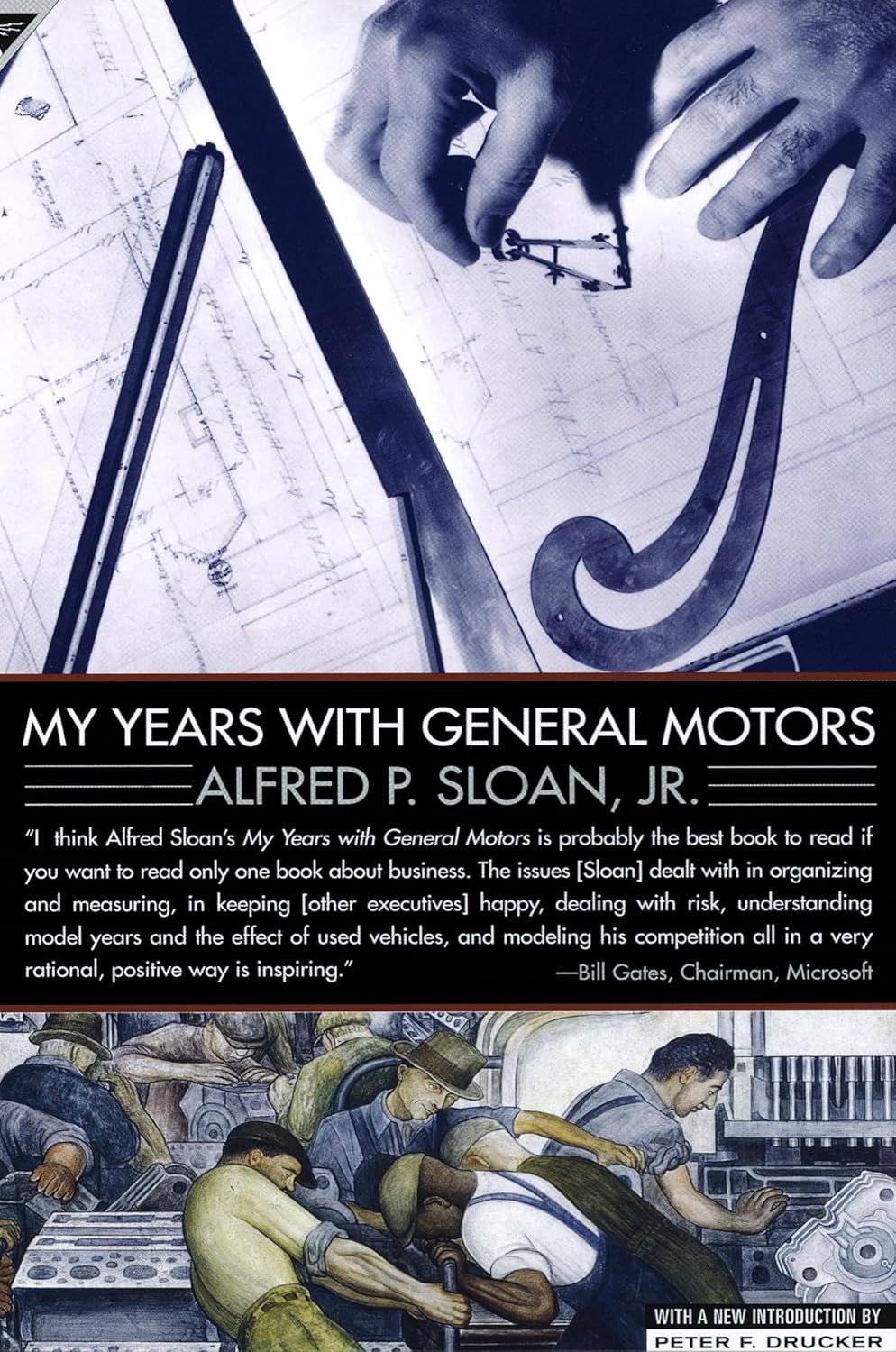
It was a bit depressing reading this triumphant memoir – indeed, one of the greatest business books written during the twentieth century – in May 2009 as the benighted American industrial icon, General Motors, slid into bankruptcy. It made the story of Sloan’s storied leadership and GM’s dramatic early success all the more incredible. Beyond that, “My Years at General Motors” resonated with me for a number of reasons.
First, Sloan provides a fascinating overview of the early automotive industry in the United States. As someone who was raised in a “car family” (my father sold Fords and my uncle managed a GM dealership), the story of how Durant and then the DuPonts and Sloan built GM to overtake Ford and ultimately dominate the car industry is a captivating one. The fact that I spent the first decade of my professional career in the software industry, which in the 2000s roughly equates to the car business in the 1920s, only added to the allure of this book.
Second, as an executive in a central role in a business unit-dominated company I sympathized with the challenges that Sloan faced in getting control of such a distributed organization as GM in the 1920s. As Sloan describes it, his goal was “decentralization with co-ordinated control.”
Third, it is sobering to read what can happen to a genuinely disruptive innovative organization over time. According to Sloan, GM was a pioneer on multiple fronts: the first to develop market segmentation of car brands and the roll-out of the annual model; the first to create a dedicated, central group focusing on body styling; the first to create a range of financial operating metrics across business units; the first to treat their dealers as an integrated part of their total operations; the most aggressive automotive firm in developing consumer finance (GMAC) for car purchases; a technical innovator in the commercial development of the diesel engine for locomotives; a leader in human resource incentive compensation models; and a leading inventor in consumer refrigeration (Frigidaire). Most amazing, from my perspective, was the work of GM’s Post War Policy Planning Group, which before the German defeat at Stalingrad issued a detailed report that accurately laid out the contours of the coming Cold War and described how GM would compete in a bipolar political world. (“The net result of the foregoing general viewpoints…is that there will probably be certain lines of demarcation or division to the west, south and east of the Soviet Union, within which the Russian idea will predominate, and outside of which the American and British viewpoint will prevail.”)
That said, for all of GM’s purported innovation under Sloan, his story makes it clear that the greatest factor in the demise of Henry Ford’s dominance was classic external market disruption, namely the emergence of the used car market and installment paying. GM simply took better advantage of these developments and others than Ford.
Finally, Sloan and his fellow GM executives were incredibly lucid writers. For me, this was the most glaring difference between then and now in corporate America. Much of this memoir is made up of extended quotes from Sloan’s internal policy papers. The clarity and crispness of these documents is impressive. By reading these nearly century-old memoranda – and without knowing the first thing about the automotive industry in general or 1920s era General Motors in particular – one can easily grasp the central facts and critical dilemmas that Sloan and his fellow executives faced. Just imagine trying to do the same reading the interminable e-mail threads and obtuse PowerPoint strategy decks that undoubtedly have flown back-and-forth between recently ousted GM CEO Richard Wagoner and his top lieutenants. (Note: interestingly enough, the contemporary exception to this Twitterization of business strategy is Amazon.com, where CEO Jeff Bezos requires that any new ideas be presented in clearly articulated white papers, not PowerPoint.)
In sum, Alfred Sloan is a real lion; an aggressive and imaginative businessman of the first order. In the closing chapter of his celebrated memoir Sloan writes: “There have been and always will be many opportunities to fail in the automobile industry.” Unfortunately, it appears that his unworthy executive heirs at GM have, in a perverse sense, taken full advantage of the many opportunities afforded them.
 What's Tim Reading Now?
Leave a comment