The Mexican beer, Dos Equis, has reportedly experienced over 20% growth since launching their hilarious marketing campaign featuring a mature, bearded man who “is often questioned by police just because they find him interesting” and who’s “blood smells like cologne.”
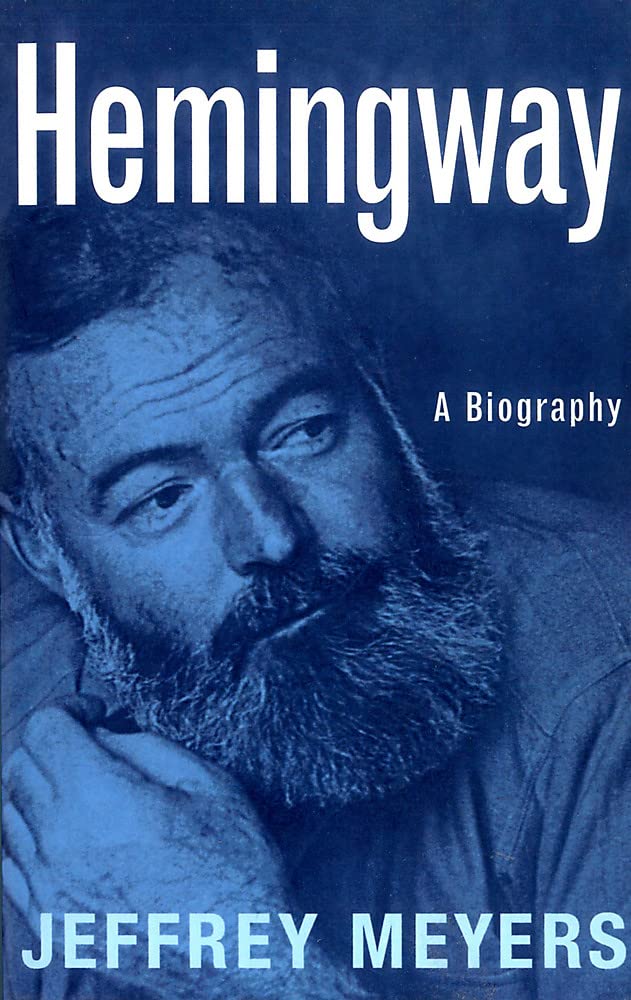
The inspiration for this contemporary advertising marvel is clearly Ernest Hemingway (who incidentally later in his life endorsed Ballatine Beer in the US). And Jeffrey Meyers’ marvelous biography of the writer generally confirms that heroic, manly caricature; a hulking, hirsute stud who perspired pure testosterone while running with the bulls, boxing with local toughs, reeling in half-ton marlins in the Gulf stream, hunting lions and elephants in Africa, fighting the fascists in Spain and France/Germany, and bedding an endless string of beautiful women, who were dangerously mature when he was a young man and dangerously young when he was in his twilight years. (Here is a Hemingway quote, which may be my very favorite: “I [fornicated with] every woman I wanted to [fornicate with] and many I didn’t, and would like think I [fornicated them] well.”) He is, for sure, a model of envy and emulation for any red blooded but morally ambiguous young man.
There was so much about this book that I loved. Here are three simple endorsements.
First, Meyers’ presents a complete and unadorned portrait of the master. In no way is Hemingway idolatrized, nor is he necessarily vilified. He was larger-than-life, largely because that is the life image he created for himself. He could be fun and self-effacing, the boisterous but interesting man toward whom the floor seemed to tilt during a cocktail party. But more often than not, especially with family, he could be a boorish, drunken liar, far from the congenial womanizer portrayed in the idealized Dos Equis commercials.
Second, Meyers does an admirable job of explaining how Hemingway’s personal life influenced his fiction. Every character model from his novels and short stories is completely and convincingly explained. Indeed, I would say that this biography is required reading for a deeper, richer appreciation of all of Hemingway’s writing.
Finally, Meyer writes with a certain clarity and simplicity that evokes the subject’s influence on American literature. This biography is a real joy to read and easy to digest, just like so many of Hemingway’s greatest works. It is recommended without hesitation to anyone.
 What's Tim Reading Now?
Leave a comment