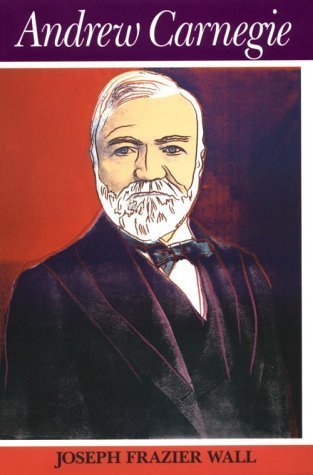
Joseph Frazier Wall’s one-volume biography “Andrew Carnegie” is a “must read” for anyone interested in early American industrial development. However, just as Carnegie’s life was much more than simply the story of steel production, so too is this biography. It is a fascinating look at the half-century of American history between the Civil War and World War I.
Andrew Carnegie was one of the most intriguing characters of late nineteenth century America. Born into a politically active although socio-economically humble family in Scotland, Carnegie possessed a passion for advancement and material wealth that propelled him to the forefront of the industrial world. Rising from Pittsburgh telegraph message boy to protege of Pennsylvania Railroad executive Tom Scott to capitalist investor and finally steel magnate in a decade-and-a-half, Carnegie was the very embodiment of the Horatio Alger hero popularized at that time.
Although he shared the same business philosophy of using retained earnings for growth rather than dividends as John D. Rockefeller and other titans and he exhibited a personal drive and sense of destiny common to other leading trust-builders, Carnegie was in one particular way very different from his peers. He was a deeply cerebral man, very well-read and able to compose thoughtful essays on some of the most pressing and challenging political and economic issues of his time. His written defense of the gold standard was used by Mark Hanna to promote McKinley’s stance against the bi-metallism of William Jennings Bryan in the crucial 1896 election; his thoughts on central banking influenced Wilson’s policies in creating the Federal Reserve System; and Carnegie was one of the very first argue for a permanent League of Nations to work for arbitration of international disputes. His close personal friends were British liberals, renowned philosophers such as Herbert Spencer and other members of the intellectual elite on both sides of the Atlantic, not fellow industrialists or business associates like Henry Clay Frick or Henry Phipps who cared little for politics and even less for the recondite subjects that intrigued Carnegie.
Wall weaves these diverse cords of Carnegie’s life into a masterful biography that succeeds as much as a social, political and business history of his time as it does in critically examining the complex character, beliefs, and relationships of an extraordinary man. Wall is certainly sympathetic to Carnegie and his achievements, but overall “Andrew Carnegie” is extremely objective and the author doesn’t hesitate to highlight his subject’s personal foibles, convenient lapses of memory, and vanity.
At over one thousand pages in length the paperback is physically imposing and can at times bog down in detail, but Wall’s lucid writing style and often sardonic wit make it a fast and enjoyable read.
 What's Tim Reading Now?
Leave a comment